

At PatientPoint, we’re always looking for ways to take our approach to messaging patients to the next level. Having heard professional patient advocate Dr. Grace Cordovano speak at several conferences, I knew she could give us valuable insights from inside the care experience.
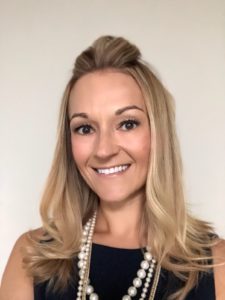
Grace is an award-winning, board-certified patient advocate (BCPA) who specializes in fostering private, personalized patient advocacy services in the cancer arena. She gained a unique view of the patient journey by working intimately with dozens of cancer patients – including her mother – and by going through the journey herself when she was misdiagnosed with advanced lymphoma. As a result, Grace sees opportunities for brands to improve the care experience for these patients.
Q: You’ve helped many patients through their care journey. What does it take for a patient to complete that journey successfully?
A: Many things are required to be successful as a person living with a diagnosis, and some of them are not clinical. We have to be mindful of things like social determinants of health. When patients go home, do they have food in the refrigerator, transportation, and someone who can help them care for themselves?
And what about coordinating care? That’s a big unmet need people face routinely. People with a chronic, life-altering condition are often distressed and disappointed by how little is done to make sure all information is communicated seamlessly to every essential care person and caregiver.
Q: How can healthcare marketers help in that regard?
A: I would love to see brands provide a tool to guide patients. When someone’s given a life-altering diagnosis, they aren’t given a map or basic list of steps to tell them that when they get home, they need to do A, B, and C. What do I do when I leave that point of care? What do I do when I go home and I have work, family, children, and so many other obligations that don’t stop because I have this diagnosis? Lay it out for me: tell me what I need to do next and what do I do if I get stuck.
Q: What would a guide like that include?
A: Ideally, it would be a digital tool, so when a person leaves the doctor’s office, they have an app that maps exactly what they need to do for next steps. Having a to-do list is not enough because the path is never straight-forward. We need significantly more than just scheduling the next appointment or establishing medication reminders. People need to know how to request their medical records, how to navigate an insurance denial, or what to do when the medication is not covered by their pharmacy. This could be easily crowdsourced, similar to how Waze crowdsources traffic and navigation. Let’s crowdsource and navigate our diagnoses together!
Q: What is a patient story that’s really stuck with you?
A: I collaborated with a woman whose blood work indicated she might have a rare cancer. She met with a surgical oncologist who recommended a Whipple procedure, a surgery that could seriously impact her quality of life. The oncologist shared his medical expertise and his concerns, the patient and I did extensive research and, after months of work, we decided to go ahead with the procedure. Two days before the surgery, the oncologist called the patient and said, “You know, I think you should seek a third opinion.” Everyone relaxed, the patient got another opinion, the surgery was put off and she is now asymptomatic with no signs of any cancer. She’s doing great today because her oncologist was thoughtful and humble enough to get another perspective. The process was a beautiful example of shared decision-making between the patient and the doctor.
 Let’s start by understanding where pharma marketing is on the analytics adoption curve.
 The Department of Health and Human Services (HHS) filed a notice of appeal on August 21st in response to the July ruling that blocked price disclosure in TV drug advertising. Handed down by Judge Amit Mehta of the US District Court, he ruled against the measure, stating: “HHS lacks the statutory authority under the Social Security Act to adopt the WAC [wholesale acquisition cost] Disclosure Rule.” At the time of his decision, HHS seemed to hint that they were going to file an appeal, saying they would “work with the Department of Justice on next steps related to the litigation.”
 Ogilvy Health, a part of Ogilvy, has promoted seven creative team members in the agency’s New Jersey and New York offices. Expressing her excitement for the department’s growth was Ogilvy Health North America’s Chief Creative Officer, Samantha Dolin: “I couldn’t be more thrilled to see this group acknowledged for their respective talents and collective leadership. Their brilliant contributions every day help to elevate the entire Ogilvy Health team and the new roles they are taking on will allow their impact to be felt more broadly across so many of our key accounts. As they continue to drive meaningful results and delight our clients, I am looking forward to building our next creative chapter with this group of tremendously talented individuals.”


 HCB Health announced the hiring of ten new team members under its BioPharma division and an additional four to support the agency across all groups. Of the new hires, three will take on roles in senior management: Gabriel Cangiano, Mark Davis, and Travis Waggoner.
 The US Department of Health and Human Services (HHS) has awarded nearly $42 million in funding to 49 Health Center Controlled Networks (HCCNs). HCCNs work together to improve access to and quality of care, as well as leverage health information technology to cut costs and improve care coordination. The funding came through the Health Resources and Services Administration (HRSA) as the HCCNs expand their usage of health information technology to empower patients and promote data sharing.
 I sat down with Charlie Greenberg, a respected healthcare industry veteran and an expert in point-of-care (POC) marketing, to discuss current trends in healthcare marketing. It’s a topic Charlie knows well, having worked for more than 30 years in the industry with giants like Saatchi & Saatchi, Wyeth, and Merck. Charlie currently serves as a media and marketing consultant, so he spends a great deal of time thinking about the ways brands can improve their reach and maximize their return on investment.
 Earlier this month, US District Judge Amit Mehta ruled that the US Department of Health and Human Services (HHS) “lacked authority from the US Congress to compel drug manufacturers to disclose list prices,” as per reports. In mid-June, Merck & Co., Eli Lilly & Co, and Amgen, along with the Association of National Advertisers, filed a lawsuit on the grounds that requiring pricing information in ads would confuse consumers as that pricing would not accurately reflect actual out-of-pocket costs for consumers due to different insurance plans and coverage, as well as further discounts and rebates. Mehta’s
  And it’s becoming increasingly clear that brands have had enough.