Latest News


March 29, 2018 0

The FDA recently released “Drugs@FDA Express”, a mobile app that allows users to search for information about FDA-approved brand and generic prescriptions, OTC medications, and biological therapeutic products. The mobile app is a “light” version of the full website, with the app omitting letters and reviews – although the app’s homepage states this and includes a link to the website for “the complete version.”

Users of the free app can search by drug name, active ingredient, or application number. They can also view the last seven days of product approvals, as well as links to FDA web pages and FDA help and support (including the agency’s glossary, FAQs, and emailing the Division of Drug Information, FDA/CDER).

FDA Commissioner, Scott Gottlieb, MD, stated in the news release announcing the app: “Consumers are embracing digital health technologies to inform everyday decisions. From fitness trackers to mobile applications tracking insulin administration, these digital tools can empower consumers with a wealth of valuable health information. Advancing mobile apps that inform people about their health and medical choices represents a significant public health opportunity and is a high priority for the FDA. The FDA is continuously seeking ways to bring information to consumers in more accessible formats. Today, with the launch of the Drugs@FDA Express mobile app, we’re bringing the public important information about drugs in an easy-to-use, mobile format. We hope that by making this important health information more easily accessible we can help empower patients and providers in making their treatment decisions.”

The app is available for both Apple and Android devices.

admin


March 29, 2018 0

Earlier this month, Sen. Claire McCaskill (D-Mo.) introduced a bill to end the advertising cost tax deduction; this is separate from the larger tax cut bill from last December which failed to remove the practice. This latest attempt, Senate Bill 2478 a.k.a. The End Taxpayers Subsidies for Drug Ads Act, is co-sponsored by Sen. Jeanne Shaheen (D-NH).

Much like previous bills similar in nature, industry pushback from both pharma and media companies alike is expected to be significant – largely citing the arguments that removing such an ad deduction for pharma would be discriminatory; it is a threat to the First Amendment; and it would prevent or limit important, valued health information from reaching consumers.

Jim Davidson, Executive Director of The Advertising Coalition, spoke with DTC Perspectives on this matter: “Section 162(a) of the U.S. Tax Code allows any U.S. business to deduct the ‘ordinary and necessary costs’ of conducting their business. Those costs include salaries of employees, office rent, business supplies – and yes, the cost of advertising. Rather than ending a taxpayer subsidy for advertising, S. 2478 would impose a tax on advertising for prescription medicines that does not apply to any other business advertising. Previous efforts to tax DTC advertising have been defeated because they threaten the First Amendment protection for commercial speech. The proposed legislation overlooks the information that this advertising provides to consumers who may be unaware of a treatment for rheumatoid arthritis, Crohn’s disease, depression, or Hepatitis C, among other diseases. Even more important, watching an ad may be the motivating factor that prompts someone with a medical condition to see a doctor for treatment.” (Jim will discuss this, as well as other Threats to Pharmaceutical Advertising, in his presentation at the DTC National Conference in Boston, April 18-20.)

“The Coalition [for Healthcare Communication], the 4A’s and our advertising allies will be taking this bill seriously, but it is unlikely that it will be enacted in this session of Congress,” said Coalition for Healthcare Communication Executive Director John Kamp in a news release in response to the bill. “While the provision is likely to garner some Democratic and even a bit of bipartisan support, the Republican-controlled Senate is not expected to hold hearings or set the provision for a vote.” He added: “The Coalition has long opposed such a change in the tax law. Proposing a ban or tax penalty on prescription drug advertising suggests that consumer ignorance should be preferred to consumer information and involvement in healthcare decision making.”

admin


March 29, 2018 0

In the latest Gallup poll, 55% of Americans “worry a great deal” about the availability and affordability of healthcare. The concerns around healthcare top the list, beating out other major concerns such as Crime and violence, Federal spending and the budget deficit, and Availability of guns. A further 23% ranked their concern level at “a fair amount” and another 23% classified themselves under “only a little or not at all.”*

According to Gallup, this is the fifth consecutive year that healthcare availability and affordability tops the list. (The first year that healthcare was asked about was in 2001.)  Senior Editor Jeffrey M. Jones, PhD, noted in the article highlighting the results that, “It is the only issue of the 11 Gallup has measured consistently to maintain this level of worry.”

Jones added that after being nearly “equally likely to worry about [healthcare] in between 2014 and 2016, after major provisions of the Affordable Care Act went into effect,” currently “Democrats have typically worried more than Republicans about the issue, including a 72% to 39% difference this year.”

With President Trump and Congress “taking steps to undo key provisions of the law,” Jones predicts that “Americans’ anxiety about the healthcare situation should persist. … Democrats’ especially high concern about healthcare could make it a mobilizing issue for the party as it seeks to win control of Congress this fall.”

For more information and poll results, click here.


* Results for this Gallup poll are based on telephone interviews conducted March 1-8, 2018, with a random sample of 1,041 adults, aged 18 and older, living in all 50 U.S. states and the District of Columbia. For results based on the total sample of national adults, the margin of sampling error is ±4 percentage points at the 95% confidence level. 


admin


March 29, 2018 0

Out-of-home advertising company, Brite Media Group, has acquired Mesmerize Marketing, a leader in patient education at the point-of-care. “Gregory Leibert, the founder and Chief Executive Officer of Mesmerize, and Craig Mait, Chief Operating Officer, will join Brite Media in leadership roles and will continue to operate the Mesmerize business along with their existing team,” outlined the news release.

With Mesmerize’s “targeted educational materials including wallboards, literature distribution, branded medical essentials, and mobile integration to patients and care givers in waiting rooms, exam rooms, and other high traffic areas of doctors’ offices, dental offices, community-based organizations, AIDS service organizations, and independent pharmacies,” Brite Media now has strong access to the point-of-care space. In return, “[t]he partnership with Brite Media gives Mesmerize Marketing the resources necessary to scale our rapidly growing point-of-care networks,” said Leibert. “Mesmerize will also look to expand our patient education and deliver significant results to our customers, by supplementing our industry-leading static media presence with new static and digital media platforms.”

Michael Ellis, Brite Media’s President and Chief Operating Officer, added that “Mesmerize will perfectly complement Brite’s current media platforms.  The combined companies will leverage the strengths, creativity, and human capital of both businesses to continue delivering outstanding results to our customers.” Brite Media had been acquired by The Beekman Group in 2014. Since then, Brite Media “has more than doubled in size through organic growth and acquisitions led by Beekman and management.”

admin


March 29, 2018 0

Andrew Schirmer has taken on the role of Chief Executive Officer with Ogilvy CommonHealth North America, a WPP Health & Wellness company. He returns to his roots, having started his career with the company in 1987. Schirmer was most recently President with McCann Global Health, overseeing the firm’s global and public health unit. According to the news release, he was “responsible for leading the work the agency did for UNICEF, the US government, the Bill & Melinda Gates Foundation and private sector organizations, and the groundbreaking ‘Immunity Charm’ campaign, which tracks vaccinations on behalf of the Afghanistan Health Ministry, and for which the agency won a Grand Prix at Cannes Lions in 2017.”

Mike Hudnall, CEO of WPP Health & Wellness, stated in the news release: “Andrew exemplifies the values we hold dear: excellence in client partnership, support for our incredible people, and an unbridled passion for making the world a better and healthier place. His professionally diverse background in healthcare marketing, consumer wellness, and public health and policy positions him well to help accelerate OCH’s diversification and growth strategy moving forward. Andrew is a champion of great work and true visionary who will bring a human-centered leadership to OCH’s culture. I have complete confidence that Andrew is the right person to unlock the potential of our people and our business as we move forward.”

Schirmer will report directly to Hudnall and work closely with Marc Weiner, Ogilvy CommonHealth’s COO; Darlene Dobry, managing partner; and Terry Cully, managing director in Canada. Schirmer fills the vacant CEO position after Matt Giegerich’s departure in spring 2017. Giegerich founded his own company, Lucky 7 Consulting, before becoming CEO with Inception Companies, a leading provider of video production, interactive visual solutions, broadcast and webcast platforms for virtual meetings, and audio/visual support.


admin


February 28, 2018 0

Last week the Departments of Health Human Services (HHS), Labor, and Treasury proposed a rule that would “expand the availability of short-term, limited-duration health insurance by allowing consumers to buy plans providing coverage for any period of less than 12 months, rather than the current maximum period of less than three months.” This will not only provide affordable coverage to Americans who may not have been able to afford current premiums and options, or lacked access to choices that properly matched their needs, but it will “increase competition, choice, and access to lower-cost healthcare options for Americans.”

While the purpose of these health plans was for temporary coverage, but due to their affordability, access to such plans “has become increasingly important as premiums have more than doubled between 2013 and 2017 in health plans on the Federal Health Insurance Exchange,” the news release stated. The short-term, limited-duration insurance does not have to comply with federal requirements for individual health insurance coverage.

Health and Human Services Secretary and former Lilly USA president Alex Azar stated: “Americans need more choices in health insurance so they can find coverage that meets their needs. The status quo is failing too many Americans who face skyrocketing costs and fewer and fewer choices. The Trump Administration is taking action so individuals and families have access to quality, affordable healthcare that works for them.”

admin


February 28, 2018 0

In the spring of 2018, Apple plans to premiere AC Wellness, independent medical centers for its employees and dependents offering concierge-like healthcare. As first reported by CNBC yesterday, Apple “quietly published a website, acwellness.com, with more details about its initiative and a careers page listing jobs.” While little information is currently available, AC Wellness’ website boasts that their Network will combine technology, high-quality care, and a unique patient experience to drive engagement and achieve exceptional health outcomes. The website also advertises for career opportunities. Positions to be filled include Health Partner, Physicians, Care Navigator, and Nurses, among others.

This initiative comes shortly after Tim Cook commented about Apple’s ability to make “significant contributions” to health care earlier this month during a shareholders meeting. Cook shared that the tech innovator is in a “great position”, being able to leverage its consumer-friendly approach, as reported by CNBC.

Apple has already been collaborating with the FDA to improve regulations on digital health products. Other coordinators announced last summer as a part of the FDA’s Pre-cert pilot program were Fitbit, Johnson & Johnson, Pear Therapeutics, Phosphorus, Roche, Samsung, Tidepool, and Verily. The work is a part of the Digital Health Innovation Action Plan.

admin


February 21, 2018 1

As a company whose products impact the lives of millions of people, many of them managing serious health conditions, we are aware of how societal trends have transformed the way people relate to their health and have evolved their expectations of companies like ours.

So when we decided to launch a new brand positioning, we not only wanted to build an identity that spanned specialty and generics and unified our businesses around the world after decades of acquisitions, but also one that positioned us as a trustworthy partner to the patients, caregivers and healthcare professionals we serve.

To look within and beyond our medicine cabinet with a fresh perspective, we got out of our laboratories and into the real world, asking questions and listening carefully to the answers. From 2015 to 2017, we talked to more than 21,000 patients, caregivers, and healthcare professionals in 20 countries. The simplest insights gained from this research have proved to be the most profound:

  • Few things matter more to people than their health, and they want to feel in control of their journey at every stage of life, both in terms of prevention and in the challenges of managing a disease. They use digital resources to seek out information they can understand from sources they can trust.
  • Consumers’ experience of service in other categories has created high expectations. They are looking for personalization, value, convenience, and relationships. Half of people want pharmaceutical companies to connect with them—online and on mobile—to provide on-demand resources and services.
  • Health means much more than diseases. We learned that people want a holistic experience that addresses their whole person: body, mind, and spirit. This includes health inputs like nutrition and medicine, health outputs like confidence and vitality, and long-term health outcomes like resilience and happiness.

These insights have proved vital as Teva has gone through an important transformation, unifying the company while also becoming simpler, leaner, and more agile. It’s not easy to form a new understanding of a company that’s been around since 1901, and launching a new brand during a restructuring isn’t necessarily intuitive. But our research helped us to understand that consumers expect us to support their health journeys, leveraging our experience to go beyond medicines to the effects of their conditions on their whole lives. And they also want to know about the company itself—insights about the character of our people, what we care about, and how we give back.

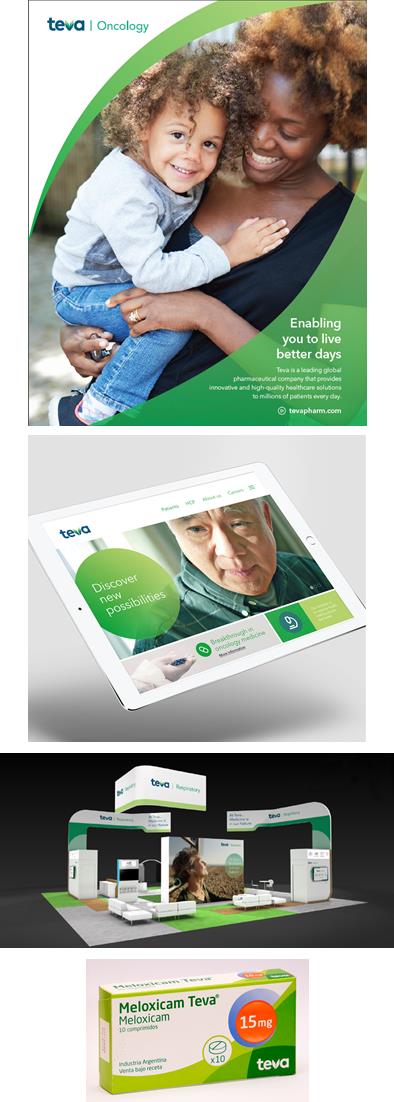
Teva’s new branded advertising, website, exhibition booth, and packaging.

Our new brand identity emphasizes that Teva is warm, approachable, accessible, and modern—a company that not only makes high-quality products but also one that listens to the people it serves. Ever mindful of our financial situation, we used existing resources in new ways, focusing on evolving the most impactful touch points to people—packaging and digital—while taking advantage of portfolio optimization, regulatory requirements such as serialization, product launches, office moves, and planned events where possible. Through it all, we’ve focused on evolving our value proposition, incorporating storytelling into our digital content offering, and making our new brand a vehicle for unification and simplification.

We’re implementing the new global brand from the bottom up, through a hyperlocal implementation approach that goes market by market with a meticulous test-and-learn rollout grounded in data and insights. To build local relevance into a global framework, we are evolving our value proposition to reflect the nuances of each market, including our business model and portfolio; the local healthcare system; and the specific needs of that market’s consumers, patients, and healthcare professionals. We started with our own employees, soft-launching the brand internally in 2016 to assess the resonance and relevance of the new positioning in different cultures and healthcare systems. Since then we’ve launched in France, Russia, and Argentina, and are rolling out the new brand in Canada and the U.S. this month, with additional launches planned throughout 2018.

In the U.S., for example, where people are more likely to suffer from chronic issues (65% versus 60% globally), we’ve partnered with Mount Sinai Hospital to meet the needs of those with multiple chronic conditions. And in Canada, where 37% of people are caregivers—supporting loved ones who could not cope without them—we’ve teamed up with caregiver advocacy groups to better support that underserved population.

And to deliver the credible online health information that patients around the world are seeking, we’ve piloted a series of articles, videos, and podcasts with the help of Healthline and the Slate Media Group. In the coming months, we’ll introduce a branded portal—first to the U.S. and then to the rest of the world—as well as a documentary film demonstrating what it’s like to be a patient with chronic conditions.

Our research has shown that digital is a cost-effective, convenient, and preferred way for us to bring value to patients and caregivers through information and resources that go beyond medicine, looking at health conditions from the point of view of patients in the context of their lives—not in the context of symptoms and side effects—which is critical to delivering on our brand promise of helping them to live better days.

Beyond gathering valuable insights and information—and meeting a lot of interesting people—our research is helping us become a simpler and more patient-centered organization, aiming to increase the trust people have in us to support their health needs.

Click here to read Teva’s news release about their new brand positioning and visual identity.


Iris Beck-Codner


October 10, 2017 0

In mid-September, DTC Perspectives spoke with Alisa Lask, the VP and General Manager of Aesthetic & Corrective Business Unit from Galderma, about the evolution of their digital marketing. “Digital has had a really powerful impact on the aesthetics brands,” she noted. Galderma’s aesthetics business unit is already seeing a large usage of their various digital assets, from materials at the point of care to their digital-only ASPIRE loyalty program. Another digital victory for the company is their Facebook Restylane® page, which after launching just a few months ago, is already outperforming competitors in the space.

Lask shared that, over the past few years, another evolution they have witnessed is how many Health Care Professionals (HCPs) are now using social media and how much they are using it. Utilizing a variety of platforms, including Facebook, Instagram, and Snapchat, HCPs are interacting both with Galderma and with patients. This uncovered a big opportunity for Galderma to invest in digital to create their own assets for their partnering HCPs, many of whom have around 10,000-15,000 patients in their databases on average. These materials not only educated the HCPs, but allowed those HCPs to share them with their staff and consumers in the office or waiting room as well.

Innovations to set a new standard

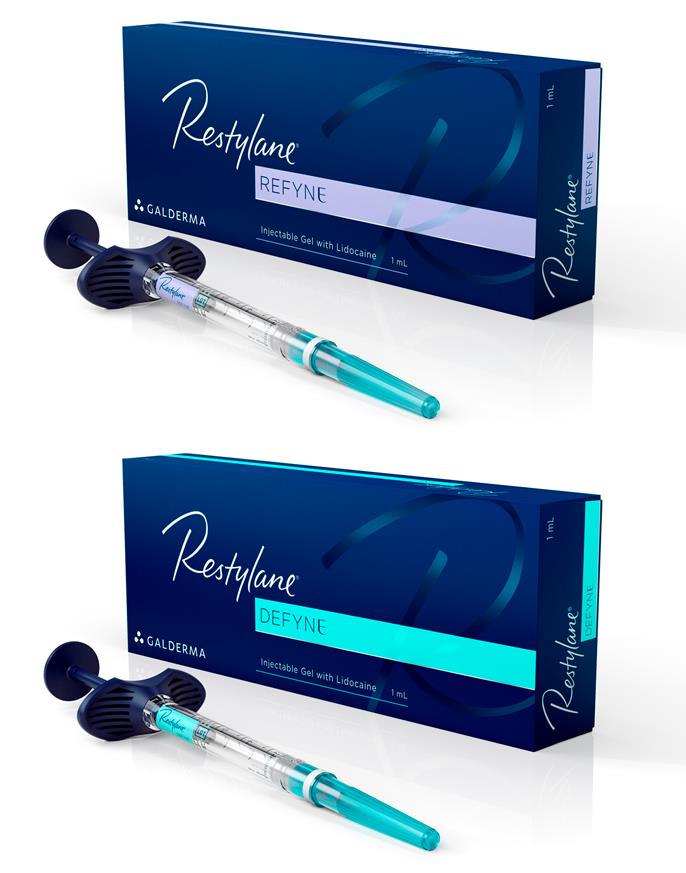
Galderma wanted to make the most of the opportunities digital affords, making one of their approaches an innovative use of video. Aesthetics products, such as Restylane®, lend themselves quite well to digital media. As the industry transitions away from still Before & After photos, Lask explained they created videos that would showcase the natural results of their treatments. “When we launched our two new products, Restylane® Refyne and Restylane® Defyne, earlier this year, the whole philosophy behind those products was that they were designed to be flexible  in animation and in expression in motion for natural-looking results.”

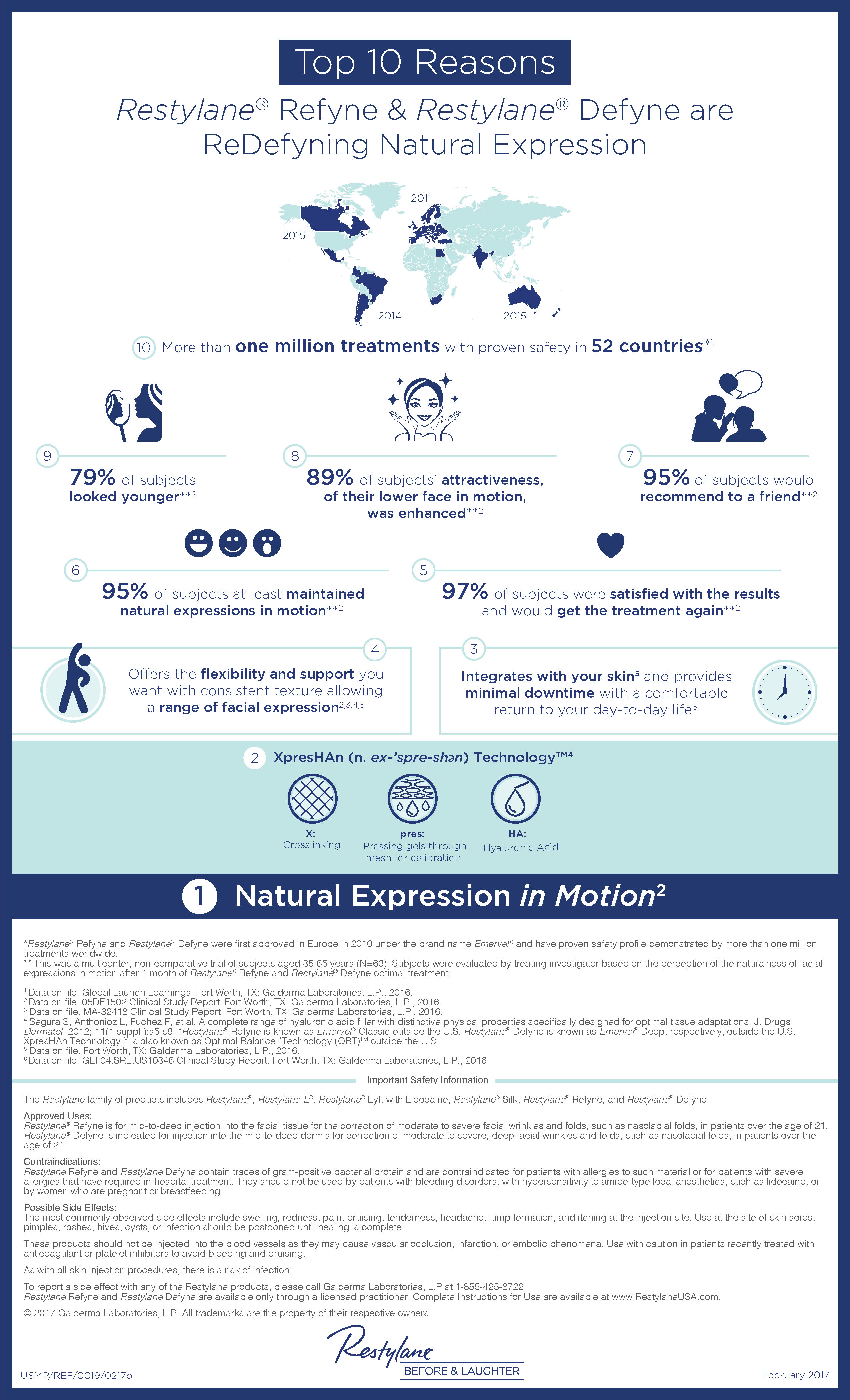
When sending out their first product samples to HCP offices, a video would play when the box was opened, with four different videos being included in each one. With people clamoring to obtain the sample boxes so they could view and share the videos, Galderma took their marketing to another level: text message video. If an individual, HCP or consumer, texted certain phrases to a designated number, they would receive four to five corresponding videos. Of the videos offering through the sample boxes and text message, Galderma developed real Before & After footage, digital animation of the mechanism in action, and the background and science of the XpresHAn™ technology. (XpresHAn™ is derived from the three components it comprises: X = Crosslinking; pres = Pressing gels through mesh for calibration; and HA = Hyaluronic Acid.)

Another innovative approach the aesthetics teams took was through their ASPIRE loyalty program, which is 100% digital communications. Consumers can receive educational emails, digital coupons towards products, and sweepstake offers electronically. Meanwhile, doctors can log onto a special portal within ASPIRE to obtain Galderma assets, find out which of their patients have redeemed Galderma offers or promotions, or track which of their patients may have lapsed in their treatment so they can provide necessary follow ups. Taking a digital only approach has not had a negative impact – Galderma’s response rates are just as good, if not better, according to Lask.

With an obvious expected increase in spending in digital and social media in the future, she said, “Having a social and digital strategy is status quo. I think the real focus is more on how digital and social are going to change, so we have to evolve our spending and budget.” With the challenge being adjusting investments, Lask added, “we all have to learn how to be a lot more nimble so we’re allowed to pivot quickly as the digital and social channels change.”

Ensuring relevance

Infographic shared with consumers, depicting the ‘Natural Expression in Motion’ theme.

Historically, pharma has often lagged behind other industries when incorporating digital or social media into their marketing due to a lack of clear FDA guidance. “There is no doubt that digital is changing faster than any of these regulations can keep up,” Lask noted, so they make sure to partner closely with their legal and regulatory teams from start and every step along the way. Consumers expect brands today to be “honest and candid, but [also] relevant to them.” Balancing such expectations with “the very important fact that we want safe and effective usage of our products … can be challenging and we’re learning as we go in many instances,” she said. Thus, they make sure their assets center on the important safety information, but present it in a consumerized way that people find engaging.

Lask stressed the importance of relevance when developing their educational and branded efforts: “We make sure first that it is relevant for the consumer. There is just so much noise out there, and if we are creating irrelevant material, you can almost guarantee that it is going to be skipped or not used. Then we put our focus on, what is the brand’s essence of our Galderma aesthetic product? It goes back to being honest, candid, and really being true to what we stand for.”

Galderma’s aesthetics brands employ both educational and branded tactics, depending on what is more appropriate at the time. “It’s a combination between education and branded marketing; we feel like you can’t do one without the other,” she said. With these treatments being elective, getting patients to be inspired by outcomes and addressing their primary concern – looking natural – is step one, she explained. Here, educational marketing leads the way. Branded marketing comes into play next to ensure the patient chooses their products, not a competitor’s.

Looking ahead

When preparing future plans, Lask has spotlighted three strategic areas, each one connected in a different way to improving access to education and information. One of the first things Galderma is keeping an eye on are websites such as Yelp or HCP reviews – anywhere that consumers can get engaged with how they find HCPs. She explained that, in the aesthetics market, those are very important to how consumers can figure out where they go for a treatment. Another area of watch for the team is around platforms such as RealSelf.com, which is a community-driven website providing information and research, reviews, and rankings for aesthetic medicines and cosmetic treatments. Lask likened it to the Trip Advisory of aesthetics.

The last key concentration is around retail pop up clinics, she said. It is empowering for consumers to have such access to information and freedom from scheduling appointments. But as a marketer, it provides other challenges – primarily, how do marketers find these places and then also ensure consumers are receiving their materials and relevant messages? Another barrier Lask found is that many of these retail pop up clinics, which are often owned by large corporations now, don’t usually want company branding or materials. She identifies this as a problem that will need to be solved in the future: “how to make sure that we’re able to touch the consumer in those offices as well?”

“The landscape is always changing, but that’s what is fun and exciting about it,” she stated. With more than two million women using aesthetic products currently and another 15 – 20 million more in the US alone who are interested in them, Lask said it is educating and providing them with information so they “really understand outcomes, what they can look like, and what’s possible.”


Jennifer Kovack


August 29, 2017 0

The scope of what we call marketing seems to be growing every day. Within the professional lives of many in the business of pharmaceutical marketing, a campaign of one-size-fits-all magazine ads alone was considered sufficient to launch and sustain a multi-million-dollar brand. Then came television, then the internet, then mobile devices, and on and on – and with each, the expectations of our audiences have grown. Today customers expect an experience from brands, one that caters to their individual needs through a variety of media, especially digital and interactive media. And for all the progress in the digital space, pharma as an industry has not done a particularly good job of providing these coordinated and customized experiences. How to improve? Read on.

Mobile-friendly just isn’t good enough.

Adapting your desktop website to make it “mobile-friendly” is starting to look a bit backwards, given that more than half of web traffic is now coming from mobile devices. If we really want to engage our audiences where they want to be engaged, we need to be thinking mobile first. Every patient interaction that we seek in the digital space – ads, websites, interactive content, email, all of it – should be created with the mobile experience at top of mind. Old-fashioned responsive design works okay for vanilla text content, but any communication tool with any degree of complexity in it ought to be built for mobile, not just able to adapt to it. Agencies and marketers need to adapt to capture attention in the first 35 characters of email subject lines. They even need to think about thumb fatigue when designing pages that may be too long.

Mobile-savvy patients expect quick hits.

People don’t use mobile devices for the same reasons they use desktops. They don’t go to their smartphones to do in-depth research; they go there to find information fast. So marketers need to be tailoring their mobile experiences that way. A good mobile site should offer access to information, services and tools quickly – services and tools like health trackers, copay support apps, specialist or pharmacy locators, non-intimidating patient education portals, touch-here-and-ring-the-patient-support-center-right-now. Great masses of text or dozens of links on a page are not your friend in the mobile environment. We see a day in the near future where patients can even “FaceTime” with their doctor or nurse for live but remote care. Telemedicine, powered by mobile and a desire to reduce healthcare costs, is about to boom!

Plain old targeting isn’t enough any more either.

Data is everywhere and those that capitalize on it will win. So we need to target more deeply – to hypertarget – and think in terms of the cultural prisms through which our audiences will view our communications. To do this we must move beyond traditional segmentation and actually build whole experiences to match each segment. For example, if your brand might have an opportunity in the Hispanic population, you should be developing your communications for that population from the ground up, not just as an offshoot of the “standard” materials. In the old days marketers used to write everything in English and translate as necessary – but today’s audiences, whatever their ethnicity, are expecting more than that. So cultural adaptation versus plain translation is the key to connecting with multicultural audiences. They are expecting communications and images and services that are attuned to their cultural background, and may be actively turned off by those that aren’t.

Leverage landing pages – and please, let’s optimize them.

A handful of pharma brands are beginning to catch on to the vanity URL and landing page concept – creating landing pages focused on narrower topics within brand.com and then strategically salting ads with them, with the hope of creating a deeper connection. For example, one might embed brand.com/efficacy into a TV ad that focuses on copay information, so that the patient ends up encountering multiple reinforcing messages. The trouble is that, as frequently happens in pharma, too many brands are investing in vanity URLs, tossing them out into the marketplace, but never really following up to optimize their use. With just a little added push – the push of A/B testing multiple URLs in the same ad or multiple ads with the same URL – brands could find out which combinations generate the most click-throughs, the most interest – and the best experience for the patient. The idea is to make every dollar work as efficiently as possible. If patient experiences are to be a matter of priority for your brand, you’d best be paying attention to the outcomes of those experiences and optimizing accordingly.

Mind your language, and how much of it there is.

We love our content in pharma. Maybe it’s how invested we are in our brands, or maybe it’s the regulatory requirements and complex review process, but we as an industry find it difficult to resist loading up our patient communications with everything at once. Yes, some of that cannot be avoided due to the need for important safety information and fair balance. But even on top of those guidelines we tend to be content-verbose, trying to squeeze everything into one experience or capture everything possible in a single registration form. It takes a true digital marketer to have the confidence to keep it short, sweet, and sticky, creating an experience and journey over time that delivers the content and value to the patient in digestible pieces.

So we need to narrow the focus of our messaging. Let our customer choose what he or she is seeking and provide it, and it alone, with a pathway to more as needed. Lose the long pages with multiple messages. Offer one call to action rather than four. Keep everything simple, scannable, short, and sweet.

Integrate, integrate, integrate.

Pharma companies love to create monuments to their brands. They can’t just offer a diet tool; it has to be the company’s branded diet tool. But customers don’t think that way. Customers want tools that are applicable across the whole spectrum of their lives, and they don’t much care what brand is attached. For example, many patients with diabetes have other health issues, too, like hypertension. In our present brand monument environment, that might mean one health tracker from the diabetes company, another from the cardio company, and maybe even another from the weight loss company, all beautifully lacquered up with each brand’s name. Or, the patient could use Apple’s Health app, which can take inputs from virtually anywhere and cover all of those bases, creating a simpler experience. Which do you think the typical patient will choose?

So we need to start thinking more holistically. If we really want to improve the patient experience, we have to start building tools and services that can be tied together with other tools and services, even third-party ones, rather than just monuments that are unique and proprietary to our own brands and companies. And yes, some companies are doing this already – Novo Nordisk with Glooko, Sanofi with Google, Novartis with Verily. But we need to see more of it. If a truly integrated and productive patient experience is going to be a matter of priority for pharma brands, we are going to have to start partnering across industries and converging when possible to provide patients the ideal seamless experience.

Aaron Uydess