Latest News


August 29, 2017 0

Today’s healthcare environment – with access to therapy and pricing top of mind, new “right to try” laws, possible legislative changes, and big shifts in the ways that consumers get health information – requires more innovative and thoughtful approaches on how to communicate than ever before. For many pharmaceutical companies, advocacy is a highly promising and rewarding way to connect with patients, families, and communities. Now, some of those efforts are coming under scrutiny.

Advocacy organizations exist to help the people and communities they serve, and can have some impressive reach. One great example is the fact that breast cancer mortality is down 38%, influenced by efforts of Susan G. Komen® to leverage science and education, and directly help patients. And there are numerous reasons that industry stakeholders engage with advocacy groups. Many pharmaceutical companies collaborate with advocacy organizations on non-promotional and unbranded activities to support the community in capacity building, education, and to build advocacy skills. Some have more direct brand objectives in mind, and support advocacy organizations with the goal of getting endorsements from the advocacy organization or from patient ambassadors. Some work with advocacy organizations so that they will recommend specific products to their constituents or to speak with legislators on behalf of companies or products.

Transparency is key to building trust

Trust is essential to building fruitful relationships between the community, advocacy groups, and industry. But lack of transparency can undermine these relationships and may have a negative impact on how the community perceives advocacy organizations and by association pharmaceutical companies. Because trust between them and the communities they serve is key, some advocacy groups have chosen not to accept pharmaceutical funding, so they can say that they are completely outside the influence of industry. The reality, however, is that it is extremely difficult for many advocacy organizations to provide the services and develop the reach and consistency they would like based only on their own public / private support and community fundraising. For this reason advocacy organizations are often open to mutually-beneficial partnerships with industry that ultimately help the patient communities they serve.

But the current level of transparency around funding of advocacy groups has recently been questioned. The New England Journal of Medicine and JAMA Internal Medicine published articles that assessed whether advocacy organizations might have significant conflicts of interest because they accept support from pharmaceutical companies. What the investigators found raises questions about the need for added transparency. According to the New England Journal of Medicine article, 80% of large organizations (annual revenue at least $7.5 million) were found to receive industry support. However fewer than 20% reported specifically how much they received from industry sponsors. More than one-third had an industry executive on their board, and another quarter did not state their board members’ occupations. Only about a quarter published conflict of interest policies, none of which specifically addressed industry influence.

Findings published in JAMA Internal Medicine revealed that two-thirds of smaller organizations (median annual revenue $299,140; interquartile range $70,000 to $1.2 million) were funded by industry and more than 10% received more than 50% of their funding from industry. More than 80% from these smaller groups felt that advocacy organizations should be cognizant of the potential for conflicts of interest, but only about half were highly confident in their organizations’ conflict of interest policies. More than seven percent were consciously aware of pressure to align with corporate interests of donors. The findings illustrate how the majority of large and smaller advocacy organizations receive funding from pharmaceutical companies, but do not have applicable conflict of interest policies to preserve transparency – potentially raising questions about credibility and undermining trust.

Advocacy organizations are not the only ones coming under scrutiny. Since 2013, the federal government has issued subpoenas to a number of pharmaceutical companies to analyze their ties to patient assistance charities. The investigations continue, and now involve many top pharmaceutical stakeholders. These inquiries are similar to those concerning financial ties between industry and physicians and their institutions, and potential conflicts of interest that could influence physicians’ clinical decisions. Financial ties must be disclosed to avoid a potential conflict of interest, or even the appearance of a conflict of interest, so that patients’ welfare remains the primary interest.

Advocacy is stronger with transparency

Should the pharmaceutical companies stop supporting advocacy organizations? Absolutely not. However, all parties should be transparent about their relationships and financial support. Recently, Stat News reported that a pharmaceutical company was found to be a secret funder of a patient advocacy organization that was working to secure more government funding and insurance coverage for treatment. Because this charitable donation was initially concealed, “outing” the company as a financial supporter became the news story. This shifted the focus from the potential positive impact of support for this advocacy group, and possibly diminished the advocacy group’s important role and ability to address a critical community need. Transparency is an effective way to help advocacy groups avoid the pitfalls of implied or actual bias concerning their work, removing a potential barrier for positive impact on the community.

Just as pharmaceutical companies have to publicly disclose payments to physicians, and many physicians are required to disclose any potential conflicts of interest based on industry relationships, it is reasonable to ask advocacy organizations to disclose their industry sponsors and the financial support they receive. This could be similar to a Sunshine Act for advocacy – only hopefully with less complexity! The goal is for all stakeholders to feel confident that everyone is transparent and playing on a level field and lets communities feel positive about the organizations representing them.

Denise Erkkila


August 17, 2017 0
Sponsored Content

Every 42 seconds, someone in the US has a heart attack. Each minute, someone dies from a heart disease-related event.1

Even though heart disease remains the leading cause of death in the US, many adults are uninformed of the causes, symptoms and proper treatment of heart-related conditions. In fact, according to PatientPoint research, over half of patients who are treated for heart health said their issues were unexpected. Further studies have found 70% of adults are not familiar with symptoms associated with heart disease.2

As these statistics reveal, the need for education and support materials for patients at the point of care is paramount – and critical to pharma companies’ success. Because if heart health isn’t top of mind for most adults, it’s likely your treatment isn’t, either. And with nearly half (47%) of cardiologists now restricted, gaining awareness among physicians is also a growing challenge.3

To ensure the right message is delivered to these heart “unhealthy” patients at the right time, PatientPoint conducts in-depth research in the space. Here’s a snapshot of patients who visited cardiologist offices installed with the PatientPoint Communicate – Cardiology Waiting Room Digital Screens Program:

  • Average age: 60 years
  • Gender: 60% female
  • Race: 79% white / Caucasian
  • Employment status: 59% retired
  • 42% are accompanied by another adult
  • 59% want to lose weight
  • Top conditions identified to be at risk for or diagnosed with: high blood pressure / hypertension (72%), high cholesterol (68%), arthritis (55%), heart disease (53%), heart attack or cardiac event (48%)

This information enables us to develop content specifically tailored to these conditions, gaining unprecedented positioning as a trusted consultant to our partners – clients, physicians and patients – to ensure their message makes the most impact at each important moment.

Let’s look at each of these points a little more closely:

  • Waiting room: Patients say the waiting room is often the most stressful part of their visit to the doctor. Reinforcing your brand message alongside easy-to-understand digital information regarding heart health, healthy living tips and personalized messages from the practice will put your brand top of mind right before patients visit with the doctor. Heart patients don’t want to hear about arthritis content. We speak the patient language.
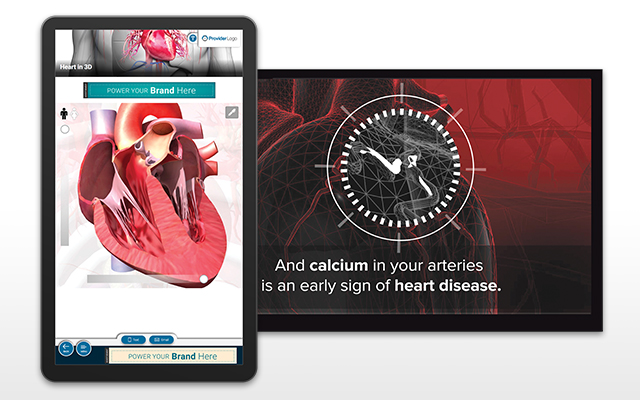
  • Exam room: Once in the exam room, patients crave in-depth education. Interactive touchscreens bring health information to life, whether it’s through a personalized quiz, short article or a brand testimonial video. Once the doctor arrives, he’s likely to use the touchscreen to show the patient exactly what’s happening in her heart via full-color, 3D anatomical models. It’s here where your brand can provide the support and savings information to help guide discussions and, ultimately, decision-making.
  • After the visit: Because the risk factors for heart disease and stroke are directly related to lifestyle choices, continual engagement between provider, pharma company and patient is important to ensure treatment success. We know those age 45-64 (the common age range for the onset of many cardiovascular conditions) still see print as a valuable information resource,4 and including your message in brochures patients can take home and reference later will help reinforce your brand as part of the solution to living a longer, healthier life.

The scale of the cardiovascular market is driving greater demands of quality outcomes data. Providing the right education to patients and providers at the right moments will help pharma companies remove barriers to access and support long-term adherence.


References

  1. American Heart Association, 2015
  2. Cleveland Clinic survey, 2014
  3. ZS Associates, “AccessMonitor,” 2015 Executive Summary
  4. 2015 Two Sides North America

Linda Ruschau


August 14, 2017 0

If you haven’t been living under a rock (or aren’t my parents), you are probably aware of the rise in popularity of voice search and voice enabled devices. Thanks to technology like Google Assistant, iOS Siri, and Amazon Echo, voice search is exploding in terms of both adoption and technology integration.

A comScore study in 2016 noted that 40% of adults now use voice search at least once per day and 60% of those people started using it in the last year. A recent report estimates that more than 24 million Amazon Echo and Google Home devices will be sold in 2017. As the technology behind these devices improves, people are turning to them at an increasing rate to obtain information, seek answers to their questions and incorporate them as a part of their daily routine. Because people can typically speak up to 150 words per minute versus being able to type 40 words per minute, and using voice search is seen as quicker than typing or using an app, voice search continues to grow in usage.

The manner in which people are using voice search, beyond just music playback, seems to focus on location based queries and answering basic questions. These uses line up well with the core functionality of voice search and are natural first steps for many people who are getting familiar with the voice search format.

However, there is much more potential in how voice search can be utilized to engage with searchers beyond what we’re currently seeing – this is especially true in the health information space.

Using voice search for health information
Currently, the number of voice search enabled health dedicated applications is very limited. One of the few available now is WebMD’s Amazon Alexa skill, which is essentially a custom voice search program geared towards health information. This new skill is aimed toward answering basic health questions and providing information in a quick and easy voice-enabled format.

Perhaps in the near future, voice applications could simply build on the commonly used question and answer format to help patients at the earliest stages of their health journey to identify potential health conditions and provide questions for them to ask their doctor.
However, while making use of the straightforward question and answer format is a good foundation, there is a plethora of untapped potential for the health information vertical to go even further and create truly interactive, immersive voice search experiences.

For instance, one of the real values of voice-based personal assistant devices is the way they have started to weave themselves into the daily routine of users. This adoption could be useful for people who manage their health conditions on a daily basis. People who live with diabetes, for example, have a variety of concerns they need to be mindful of which could potentially be tied in to the usage of voice based personal assistant devices. These uses could include:

  • Reminders can be given when it is time to eat, drink and check blood sugar levels
  • Using location-based weather forecasts, the assistant can give recommendations for exercises appropriate for that day and even skin care tips in order to keep skin hydrated
  • From a dietary perspective, when someone utilizes the “shopping list” feature of these devices, perhaps a diabetes app can recognize the ingredients and make suggestions for recipes to make using those ingredients that are diabetic friendly
  • Searches for recipes or restaurants can factor in diabetic restrictions when making recommendations, which will allow the voice search experience to be not only highly efficient but extremely personalized to that person’s location and health needs

As people continue to utilize voice search based devices, the amount of health information applications will continue to grow and open up new avenues to engage people with very individualized healthcare information experiences.

Taking healthcare conversations to voice search
It’s one thing to have a presence in voice search, it’s another to provide an application that people find truly helpful and improves the quality of their health journey. To create a voice search experience that is meaningful and useful, developers must provide people with trustworthy information as efficiently and accurately as possible in their moment of need. This is easier said than done, but the ability to offer such valuable and intimate service means there is the potential to become a part of each person’s daily routine.

Much of the potential value in voice search is in the organic experience it can create. Where healthcare is concerned, many people still feel that having a conversation about your health questions, such as you might have with your doctor, is a more natural and credible experience than Googling for information. Voice search and personal assistant devices have the capacity to create a conversational experience that can make people feel more comfortable and thus dive deeper into their health information search by engaging in a way that more closely mimics the interaction that might occur with their physician.

Healthcare brands and organizations who wish to make full use of voice search will have to be true to themselves and to their audience about the types of information they are seeking and how to answer those questions. For brands, this means potentially providing information that they might not normally be comfortable with discussing. Topics such as side effects and pricing are often avoided on brand websites despite searchers frequently looking for this type of information. In addition, we often see in our research that people commonly make comparison searches, essentially typing in “brand A vs brand B”. This is content that is typically not included in brand experiences. In order to feel comfortable engaging in voice search and adopting a vastly new method of searching for health information, people will need to feel as confident in the answers they are receiving as if they were coming from an unbiased source such as their own doctor.

As people embrace this new technology to seek out health related information, the healthcare world has a tremendous opportunity to make an impact. This starts with creating an experience that truly harnesses the value of voice search to empower the user to feel more in control of their own healthcare.

Richard Deede


June 30, 2017 0

Earlier today, Nebraska Senator Ben Sasse sent a letter to President Trump urging him to separate the actions of repealing and replacing healthcare, rather than doing them simultaneously, if there is still no resolution by July 10th. Since not enough progress has been made on healthcare, during an appearance on Fox & Friends this morning the Republican Senator recommended that repeal be handled first and then “have the President ask us to cancel our August state work period and stay here [to] then work on replace separate. We made promises to the American people, we should fulfill them.” Sen. Sasse – who is a supporter of as much repeal as allowable – stated in his letter to the President: “We should include a year-long implementation delay to give comfort to Americans currently on ObamaCare that a replacement plan will be enacted before expiration.” President Trump agrees with the idea of separation, tweeting this morning, “If Republican Senators are unable to pass what they are working on now, they should immediately REPEAL, and then REPLACE at a later date!”

admin


June 30, 2017 0

PatientPoint announced this week that it received $140 million in capital from private investment firms, allowing for significant digital growth in its point of care networks. Serving as a strategic advisor, the Peter J. Solomon Company secured the financing from Searchlight Capital Partners and Silver Point Capital.

A leader in patient education and engagement programs in the point of care space, PatientPoint provides trusted content, which is largely created internally, that is tailored to particular healthcare professionals’ specialties. The programs are offered through a variety of channels, including digital screens in waiting rooms and interactive touchscreens in exam rooms – currently found in more than 31,000 doctor’s offices and 1,000 hospitals across the country. While today’s impact levels reach over a half a billion patient and caregiver visits annually, founder and CEO Mike Collette stated via news release that “by 2019, our goal is to provide programs that can impact 60-70% of brand prescribing volume in the most strategically important specialties.”

Collette, who recently returned to his leadership post at PatientPoint, explained, “We have invested a significant amount of financial and human capital into product development over the past six months to ensure that our programs are truly best in class.” Traver Hutchins, Chief Growth Officer, added, “While much of our growth will be through amplification of existing programs, we will also be solidifying several acquisitions and partnerships that will further strengthen our product offerings. We have also significantly increased our data-driven marketing expertise, allowing us to provide more personalized, relevant communication to patients for a truly enriched healthcare experience.”

The rapid growth of the point of care industry combined with PatientPoint’s innovative patient programs, reliable analytics and insights, management experience, and the trust of healthcare providers, solidified commitments from investors. PatientPoint enhances the healthcare experience for patients and caregivers through its cohesive, end-to-end communication platform, whether it be in the primary care space or complex specialties.

Click here to read the full news release.

admin


June 29, 2017 0

The concept of coaching is pervasive in today’s culture with many popular forms: life coach, fitness coach, personal coach, wellness coach, and behavioral coach. Regardless of the topic, coaches help us to take the next step towards achieving our goals. But understanding the purpose behind behavioral coaching is particularly important as we seek to meet patient needs. Behavioral coaching uses evidence-based clinical strategies and interventions to engage patients in behavior change to better self-manage their health[1]. The ultimate goal is to improve health outcomes, lower risk, and decrease costs[2].

Using behavioral science to address adherence barriers is not new to sponsored patient support; in fact, behaviorally based programs have been around for years. However, the application of live, two-way support to identify barriers in real time and deploy specific messaging, resources and coaching support is on the rise.

Digging into behavioral barriers and their importance

Behavioral coaching encourages a two-way, patient-led conversation to uncover barriers to adherence, express empathy, and offer personal support that results in a collaborative action plan to maximize adherence.

Results demonstrate that frequent, personalized interactions with patients create opportunities to reinforce messages about adherence and allow patients to take an active role in managing their own healthcare. By using behavioral-based techniques, pharmacists and trained contact center agents can help deliver impactful conversations with patients.

Increased financial responsibility for rising healthcare and drug costs is a significant issue. However, most non-adherence is not due to drug cost. It is estimated that 69% of the problem is behavioral, such as perceived benefits, poor doctor-patient relationship, medication concerns, or low self-efficacy[3].

Leveraging behavioral coaching techniques

In order to be impactful, therapeutic class insights can be critical to truly understanding patient needs and delivering support that drives improved outcomes. While each patient’s situation may be unique, our experience in behavioral coaching reveals similarities across therapeutic conditions which can be used to infer best practices in addressing patient challenges across brands and patient populations. For example, sensitive conditions (HIV, hepatitis C) have social implications that may require more empathetic messaging than more mainstream chronic conditions (diabetes, hypertension). Patients with a visible dermatological condition (psoriasis, onychomycosis) often face quality of life issues that may require significantly different support.

Helping to overcome these barriers is individualistic in nature, and takes investment, patience, and experience. Behavioral conversations can identify a patient’s position on their treatment paradigm, help them to clearly define their treatment goals, and create a path to reach those goals with dynamic support provided at every step along the journey.

Alignment of goals between the coach and the patient is one of the most important steps in improving outcomes. Patients are more likely to succeed if goals have personal meaning, as opposed to focusing on achieving an external reward or avoiding punishment. A patient’s active engagement is the key to setting goals designed to help them commit to behave consistently and have greater focus on attaining a goal.

Techniques like active listening and reflective response involve patients digging deeper into their personal barriers, which is critical to help set goals, as well as work towards achieving them. Both techniques require focus and effort. It is more than simply listening in order to reply, but listening to understand – not just the words, but the emotion behind the words, that influence the patient[4].

Patient-centered behavioral coaching is designed to help patients determine the way in which THEY believe they need to change their behaviors to achieve their goals. Patients who feel listened to are more comfortable with the care they receive and are more likely to adhere. The way in which the coach responds is equally as important as listening[5]. A good example is smoking cessation. While a smoker knows that smoking is bad, telling the patient to stop rarely, if ever, encourages them to do so and often forces them to defend the very behavior we are attempting to influence. As a result, the patient resists, and presents arguments to counter the proposed change.

How coaching can build an integrated brand experience

Behavioral conversations are designed to “meet the patient where they are,” but this also can refer to the channels through which patients can be coached. The same patients can be touched across multiple channels to enhance the overall patient experience and outcomes. Paramount to building a consistent, impactful support program is to place the patient needs in the center, then build an integrated experience across channels, internal stakeholders, and budgets. Channels where pharma brands may reach patients through coaching include:

  1. Phone Coaching: Research shows that phone coaching for people with chronic conditions can improve health behavior, self-efficacy, and health status. Planned phone coaching sessions appear to be most effective for improving self-management skills in people from vulnerable groups. Phone coaching services have the advantage of regular contact – helping people develop their skills over time – and the tailored conversations allow the coach to support the patient’s individual needs[6].

Using dynamic, two-way conversations, coaches can identify adherence barriers and provide targeted messaging to help overcome those barriers, connecting with patients using proven health behavior change tools and techniques. This approach can, with proper consent from the patient, also align personalized messaging with a patient’s co-pay program level data, as an example. Recognizing that adherence barriers change over time, as well as patients’ information and education needs, brands can integrate out-bound support and multi-channel communications to maintain personalized support for patients throughout their treatment journey.

Diabetes Coaching Case Study

Adherence Barriers: The life of a diabetic patient is a juggling act to maintain glycemic control: blood-glucose testing, exercise, and diet. Many Type II diabetics struggle with the condition from the point of diagnosis, and consequently have feelings of failure if they progress to an insulin-dependent state. These issues create multiple challenges to medication adherence, and disease and blood-glucose management. It’s easy for these patients to feel out of control with the regimen complexity and the associated long-term complications. Studies show a significant number of patients don’t take their medications as prescribed, which may reduce effectiveness and lead to additional complications. Increasing adherence in diabetic patients is a tri-pronged approach and an important consideration when supporting the patient.

Program Goal: Improve adherence through providing behavioral coaching individualized to the needs of patients segmented on level of engagement. Results demonstrated that patients who were coached were 25% more adherent to therapy vs. control during a 9 month study. This 25% increase in adherence translated to an increased length of time on therapy of nearly 31 days. The primary conclusion proved coaching increases adherence and is effective across all behavioral segments.

Symphony Health Analytics, 2016

  1. Hub Support: Delivering a consistent experience through all patient support programs, from therapy initiation and throughout the patient’s journey, is increasingly important. Many brands have different decision makers leading these initiatives, resulting in a lack of integration between various hub services, patient support programs, and co-pay card vendors. This lack of integration leads to a disjointed patient experience and a missed opportunity to maximize patient impact. Integrating access with adherence is crucial to a patient’s success – and coordinating that support, data integration, and a seamless patient experience, increases patient success.
  2. Specialty Pharmacy: With the dosage complexity and costs associated with specialty medications, pharmacies offer varying levels of patient support. When building a comprehensive patient support program, it is critical for brands to understand how the pharmacies’ approach to patient support compliments its distribution model and patient experience goals. For example, Biologics, one of the leading specialty pharmacies in the country, provides patient support through oncology nurses, who are experts in setting appropriate expectations, providing empathy, identifying psychological challenges, and linking the patient to brand approved resources.

The use of behavioral coaching is growing significantly within oncology to support patients moving from an end of life diagnosis to living with a chronic disease. The unique characteristics of oncology patients present complex challenges that impact the best approach to help patients achieve positive outcomes with emerging, specialty pharmacy treatments.

Improving medication adherence

To effectively combat non-adherence, industry must explore patient-centric approaches that increase adherence rates and improve patients’ quality of life. This requires a shift from short-term initiatives to longer-term strategies, recognizing that behavior change takes time.

Behavioral coaching conversations that leverage powerful tools, such as active listening, open ended questions, and reflective response have consistently increased adherence. These conversations allow patients to dig deeper into their own personal barriers, to help coaches and clinicians set appropriate product expectations, leverage available resources, and develop a plan of action to prevent non-adherence. Ultimately, the strategic balance between patients’ needs and brand goals results in a scalable adherence solution that builds patient engagement, giving brands the ability to optimize patient spend and identify communication strategies most likely to meet the needs of targeted patients.


References

[1] Huffman M., Miller C. (2015). Evidence-based health coaching for healthcare providers (3rd ed.). Winchester, TN: Miller & Huffman Outcome Architects, LLC. Google Scholar

[2] Judith H. Hibbard and Jessica Greene What The Evidence Shows About Patient Activation: Better Health Outcomes And Care Experiences; Fewer Data On Costs Health Affairs 32, no.2 (2013):207-214 doi: 10.1377/ hlthaff.2012.1061

[3] http://lab.express-scripts.com/lab/insights/adherence/a-new-perspective-onnonadherence; http://healthitanalytics.com/news/69-of-medication-non-adherencedue-to-poor-patient-behaviors

[4] http://www.guilford.com/books/Motivational-Interviewing-in-Health-Care/RollnickMiller-Butler/9781593856120/reviews

[5] http://www.guilford.com/books/Motivational-Interviewing-in-Health-Care/RollnickMiller-Butler/9781593856120/reviews

[6] (Aust Health Rev. 2013 Jun;37(3):381-8).

Amanda Rhodes


June 28, 2017 0

Nurses today are in an optimal position to help pharmaceutical companies. According to the American Nurses Association, nursing professionals have high levels of trust in terms of consumer perception for the past 15 years, and nursing reliability and expertise is recognized within the healthcare profession.

Yet the critical functions of nurses within the pharmaceutical industry can be easily overlooked in comparison to traditional clinical positions. That’s despite the fact that nurses play vital roles in communicating information both to and from the patient in pharmaceutical settings.

For example, a nurse health coach delivers key information and support to the patient during medication adherence and patient engagement programs. Likewise, nurses on pharmacovigilance (PV) teams process information from the patient, applying their analytical skills and clinical knowledge to improve the safety profile of a drug or device.

Both the patient engagement and PV nursing roles necessitate empowerment and smart decision-making. Research demonstrates that empowered nurses empower patients, resulting in improved outcomes. Nurses within the PV sector need to be empowered to make the best decisions given the information at hand.

Bringing their best work

On a typical day, a nurse on a PV team may receive and review safety information from a variety consumer and healthcare professional sources. Using clinical and analytical expertise, the PV nurse summarizes the information and submits safety data for pharma representatives’ assessment against the safety profile of their drug or device. PV nurses are also a resource for investigative sites with respect to reporting safety information that protects consumers. Soliciting and processing follow-up information is a key responsibility of PV nurses to ensure that pharma companies, regulatory authorities, healthcare professionals, and patients have complete information regarding the safety of consumer drugs and devices.

At every step of the way, PV nurses should be empowered to do their best work. This starts with their clinical expertise. I encourage the nurses on my team to build upon their clinical experience to better understand disease processes or conditions beyond what is apparent at the “surface level.” As part of that process to dig deeper, nurses need to understand the gray areas and be prepared to navigate murky waters. That involves knowing what is important to extract from the data they receive and applying the right analytical skills, in addition to using their clinical background knowledge.

What’s the benefit?

While in a conventional sense PV nurses may not be considered for their significant role in disease education and awareness, they certainly serve a crucial role as protectors of the consumer. Their work affects research processes and outcomes that will influence disease or condition management in the years to come. The work done and the information processed by the PV nurse have the power to improve drugs and devices, change clinical practice, and improve patient safety outcomes.

In the end, nurses within every role — whether pharma or clinical, health coaching or PV — play a vital role in our healthcare system. Pharmaceutical companies should leverage the vast experience and knowledge nurses can bring to the table. Empowered nurses are powerful agents of change that have positive effects on the pharmaceutical and healthcare industries, and within society at large.


Dr. Adele Mueller PhD MSN RN


June 28, 2017 0
Sponsored Content

As patient centricity continues to become the industry priority, the need to get the right information to the right patients at the right time in the right format is more important than ever—especially for pharma.

Our recent white paper touched on the disconnect patients feel with pharma companies. Today, only 9% of patients say pharma does all it can to help.1 That is, if these patients even know who the pharma companies are: Nearly 40% of patients don’t know any of the companies behind their treatments.2

I’d venture to guess, however, if pharma companies offered these patients the information they needed, in the format they desired, at each point in their healthcare journey, those stats would quickly change. They are for our clients, at least, who are leveraging a variety of our point-of-care solutions.

No marketing campaign is complete today unless it covers a variety of channels – digital, social, mobile and, yes, even print. We know different media will work more effectively for different demographics and different locations and different specialties. That’s why the PatientPoint solution set features the widest range of channels in the POC market; each is meant to maximize the meaningful impact pharma brands can have on patients.

Take, for instance, a 50-year-old man waiting to see his urologist. It’s unlikely he’s willing to grab a brochure on ED in front of others in the waiting room. But he will watch a digital screen displaying a segment on his condition. Once he gets into the exam room, we know he prefers more in-depth printed pieces he can read and refer to later when deciding on treatment.

How to communicate with your target audiences doesn’t need to be an either/or decision between print and digital. Both are perfect complements to each other – and both are necessary to a holistic, satisfactory patient experience.

That’s why I’m always surprised when I read articles declaring print as a communication of the past. It’s certainly not true in our industry – just ask our clients who are using our print program as part of their multi-channel marketing strategy and seeing great results (as in +12.5% incremental NRx).

Print remains a vital part of the patient experience and an important connecting point to both patients and physicians:

  • More than half of patients rank printed brochures or booklets that give disease or drug information as the most useful communication method3
  • 55% of HCPs say they rely on printed communications when talking with patients over any other form of communication4

Having your brand be a part of trusted materials a physician hands to his or her patients offers a unique level of credibility and implied endorsement. It also shows you’re considering many patients’ personal preferences, which will help relieve some of that disconnect patients are feeling, which I mentioned earlier.

In the end, what matters most is the experience created for patients. A communication strategy that combines a variety of media offering highly relevant, personalized content will ultimately power the greatest effectiveness.


References

  1. MM&M, “Patient Engagement: All Grown Up—Patient Engagement Comes of Age,” 2015
  2. Ed Miseta, “Patient Survey: Tech Use Up, Pharma Disconnect Remains,” Clinical Leader, 2017
  3. eyeforpharma/Health Perspectives Group report, 2017
  4. Marc Iskowitz, “In health education, providers prefer paper: study,” MM&M


Linda Ruschau


May 31, 2017 0
Sponsored Content

In light of the upcoming Men’s Health Month in June, I thought it relevant to talk about one of the biggest challenges pharma marketers have come to PatientPoint for help with: how to engage men and get them talking about their health. While George Clooney has always been my ideal target, for pharma brands, the challenge is getting their message to men at the most impactful moments when they are willing and ready to act. Those moments are rare.

According to a recent survey, in the last year,1

  • Almost one-fourth of all men had not seen a doctor
  • 1 in 3 men had no regular doctor
  • More than half had not gone in for a routine checkup

Further, nearly seven out of 10 men with advanced prostate cancer ignore their symptoms.2 These statistics are not just shocking, but concerning. That’s why we fully support movements like Men’s Health Month and organizations like the Movember Foundation that speak to men in a way that gets their attention and encourages them to take better control of their health.

These initiatives represent a huge opportunity for pharma brands to be involved in the conversations happening outside of the doctor’s office. But I want to focus on what, I believe (and is in my sweet spot), is an even greater opportunity—inside the doctor’s exam room. It’s here where men’s attention and willingness to engage has peaked; they are in a private space and can be vulnerable about even the most sensitive conditions. They’re attuned to their health, and they’re ready for the right information from their physician and you.

Our presence in the exam room with the PatientPoint urology educational program has shown us the exact type of messaging that resonates with a male audience to get them to speak up. My recommendations:

  1. Spark a conversation

While many initiatives are catchy and get men to think about their health, the most important conversation happens inside the physician’s exam room between the man and his doctor. That’s the conversation that leads to action—and prescriptions. Being present in exam room educational materials that men can peruse while waiting for the doctor to enter primes the conversation about to happen. Topics like erectile dysfunction or prostate problems aren’t easy to bring up. Our brochures offer men starter questions and discussion prompts to get the conversations going.

  1. Catch his attention

A brand in a plethora of many isn’t going to catch anyone’s eye. Category exclusivity should be a crucial component of your marketing strategy in the exam room to ensure your brand is the only brand the man sees.

  1. Tell him what to do

More than half of men say they find great value in information available when deciding what drug to take—so tell him! Offer a discussion guide that men can use to start talking with their doctor, provide calls to action that prompt men to ask the doctor about a specific topic or bring attention to symptoms that may lead to a better, more productive discussion with the doctor, and better health outcomes overall.

Helping enrich that discussion keeps you top of mind at the moment of script and reinforces your brand when men are at home or with their partner reviewing the brochure they took from the exam room: 68% of men strongly agree it’s their responsibility to inform themselves about the medicine their doctor recommends.3

There’s no greater opportunity for pharma brands to make an impact on men and drive greater effectiveness than in the exam room. Make sure your brand is the only solution top of mind when men are actually ready to take action about their health and talk to their doctor.


References

  1. Commonwealth Fund survey
  2. The International Prostate Cancer Coalition, Bayer HealthCare, Harris Poll—Prostate Cancer Symptoms Survey
  3. ID Media, New Realities study

Linda Ruschau


May 31, 2017 0

Outcome Health announced its first-ever round of funding closed at a $5B valuation pre-money from a group of investors, including Goldman Sachs Investment Partners, Alphabet’s growth equity fund CapitalG, Leerink Transformation Partners, Pritzker Group Venture Capital, Balyasny Asset Management, and strategic healthcare stakeholders. According to the news release, the nearly $600 million raised during this round “will fund the company’s continued acceleration as Outcome Health grows from 20% of U.S. physician practices currently to 70% by 2020, and pursues new investment opportunities and international growth.” The leading health decision platform will increase its market share in a variety of point of care settings – including hospitals, health systems, and health practices.

Outcome Health provides tablets and large-format, wall-mounted touch screens which doctors and patients can utilize during their appointment. Among its unique features, the technology provides the largest English-language health library, showcases 3-D models that doctors can move and use for demonstrations, and allows drug ads that share health or Rx information or recruit patients for clinical trials.

Rishi Shah, the Founder and CEO, stated, “Outcome Health and its investors have gathered around a shared commitment to connect ten million exam rooms and billions of moments of care around the world to ensure that patients and doctors can make the best health decisions every time. Together, we have the opportunity to bring healthcare from an age of information to an age of intelligence.”

According to Todd Cozzens, co-founder and Managing Partner at Leerink Transformation Partners, one of the investors, “Outcome Health is redefining the way that the life sciences, payers, healthcare IT, physicians and patients interact. The technology enhances the most important event in the delivery of care – the trusted moments where the doctor and patient make decisions about their conditions and treatments – and represents innovation that we are proud to support.”

Shah explained to Forbes in an exclusive interview, however, that Outcome Health is not simply in the point of care market, but rather has a broader reach in the healthcare industry, especially as it continues to fuel its significant growth. In addition to working with healthcare professionals and patients, the Forbes article noted how Outcome Health also works “on businesses for healthcare providers and with Medicare on new payment models. With the new funding, the company can pursue more aggressive acquisitions in the months to come, as well as invest in startups that might want to create content or build applications to house on Outcome’s content network.” As Shah told Alex Konrad and Matthew Herper, “We’ve created a multi-sided network that gives payers and life science companies a seat at the table. They can help doctors and patients make the best decision every time.”

admin