Latest News


June 25, 2020 0

Sponsored Content

Earlier this year, Rx EDGE Media Network / LeveragePoint Media acquired Brandperx. The company has now transitioned into a brand-new company, InStep Health. In an interview with DTC Perspectives’ Chairman, Bob Ehrlich, InStep Health’s president and CEO, Nathan Lucht, discussed ways their programs educate patients and consumers, providing brands with new opportunities to reach audiences in meaningful ways.

Bob Ehrlich: The company has undergone some very big changes in a short period of time. In less than a year, you have acquired another company, Brandperx, and undergone a full rebranding. What inspired these changes?

Nathan Lucht: Reflection, evaluation, and ultimately change are all important components of a healthy company—and imperative to performing at your peak. Before we began the acquisition of Brandperx, we had already started reflecting and evaluating, and adding new offerings to our platform. We were improving our targeting capabilities, adding digital programs, and making our data insights even stronger. When we became familiar with Brandperx and their HCP network and relationships, we thought it was a natural fit for us. It provided the perfect opportunity for us to bring even more marketing solutions to pharma marketers that want to educate patients and their providers. As for the rebranding, a new name and aesthetic is the quintessential way to break away from past narratives. We are proud of our past accomplishments from over the last 19 years, but we wanted a new name and look that would convey the excitement we felt about the new offerings.

Bob: What is behind the name ‘InStep Health’?

Nathan: During our background work, we reflected on the strong culture our company (both legacy companies) have and the relationships we have with our clients. There were a few themes that consistently resurfaced, and connection was one of them. The connections between clients’ messages, providers, patients, and consumers. We wanted to produce marketing that matters to care providers and consumers and remain in stride, in sync, and inspired by what’s next. Doctors want to be in step with the patients, and patients want information that’s in step with what they’re going through! That’s what we deliver.

Bob: How big is your network ‒ in physician offices and in pharmacies covered?

Nathan: It’s very large, which is why our programs work so well—because we can reach consumers and patients at healthcare destinations all over the country. Currently our network consists of 250,000+ healthcare providers and more than 30,000 retail locations.

Bob: What is InStep Health able to do better by bringing together services offerings at the pharmacy, HCP, and point of care?

Nathan: Great question. We are delivering brand messages to specific audiences in the physical locations when health is top of mind, and we are making an impact as they use their digital devices whenever and wherever they are. Our platform keeps clients’ products at the forefront throughout their target audience’s entire healthcare continuum.

Bob: What specific products are you offering patients at each step?  What does this network actually look like to a consumer?

Nathan: At the pharmacy, millions of consumers see our media displays in the aisles that offer prescription savings and high-impact educational materials that drive the consumer to the pharmacist or physician to find out more. In the providers’ offices in our network, they’ll see physician-endorsed activation bags and education kits filled with relevant samples, incentives, and other resources. And our addressable digital programs allow microtargeted campaigns to reach the right patients as they move throughout their daily lives.

But what our new platform has really focused on is keeping our clients in step with the consumer’s individual experience ‒ it’s what we call the iX design. We connect the consumer to our client’s brand messages throughout their unique care path with all of the tools we mentioned above, and by inspiring meaningful conversations between patients and healthcare providers for healthier outcomes.

Bob: How have you increased your technical abilities to support these networks?

Nathan: This is an especially exciting area for us! We’ve made a lot of investments in this area and we break that effort into two parts: one, using data from the pharmacy and HCP office networks to create more effective programs. And two, using digital activation programs to provide clients seamless patient reach. From the data perspective, we’ve always been focused on using prescription fulfillment data to place our clients’ programs in exactly the right pharmacies. We’ve now amped that up so that we can do that type of planning in any of our physician offices. And on the digital activation front, we now have technology that we call “Arrivals” that allows us to serve mobile takeover messages as the consumers step into our waiting rooms and our pharmacies. This technology then combines with some leading-edge capabilities in HIPAA-compliant audience targeting when patients aren’t in our point of care settings. All these pieces fit together like a jigsaw puzzle and it’s really great stuff!

Bob: What kind of returns are clients seeing within your network and how are you measuring those?

Nathan: Clients know us for the results we deliver since we have been quantitatively measuring our legacy pharmacy programs literally since day one! So, creating smarter, data-driven programs and measuring their success remains at the core of our new platform. InStep Health has built a flexible measurement approach utilizing best in class data and third-party partners to deliver metrics and insights for every initiative we execute. We can successfully measure prescription lift and ROI in stores. On average our clients see a script lift of 12% and an $8 ROI through the pharmacy alone. We also measure changes in prescribing at the physician level, OTC/CPG sales lift and ROI, increases in physician recommendation and awareness, response to digitally served ads, and digital audience composition. 

Bob: Bringing it back to all of the renovating the company has recently done, what has been the best part of this process?

Nathan: Yes, we have a great new look, and an inspired new name. But personally, to me the best part has been unifying two great companies with their individual strengths and bringing together two incredible teams of people to form one powerhouse. We know we can do really extraordinary things together, and we have just gotten started bringing them into the current landscape of healthcare marketing.
admin


June 25, 2020 0

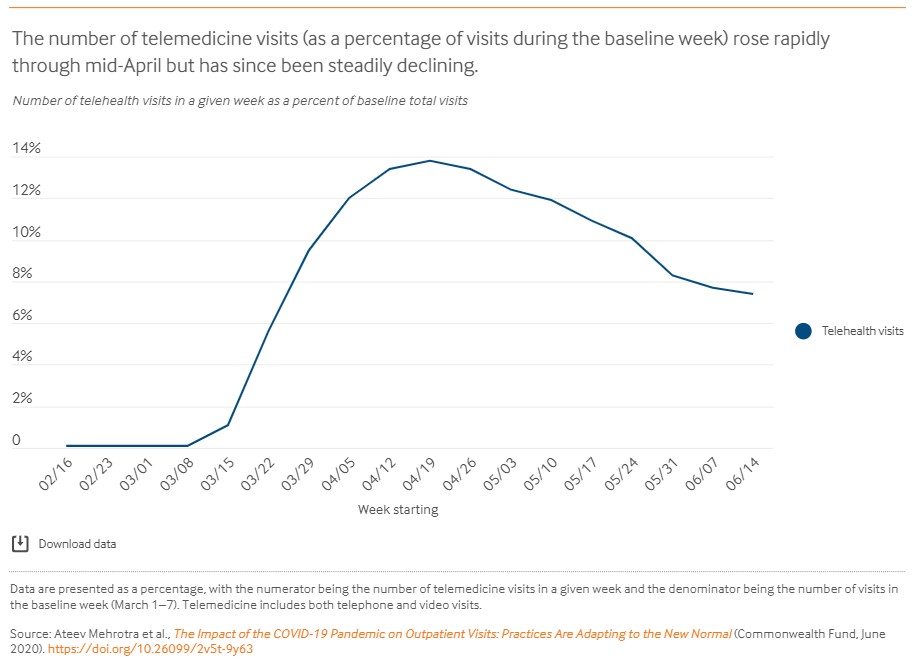
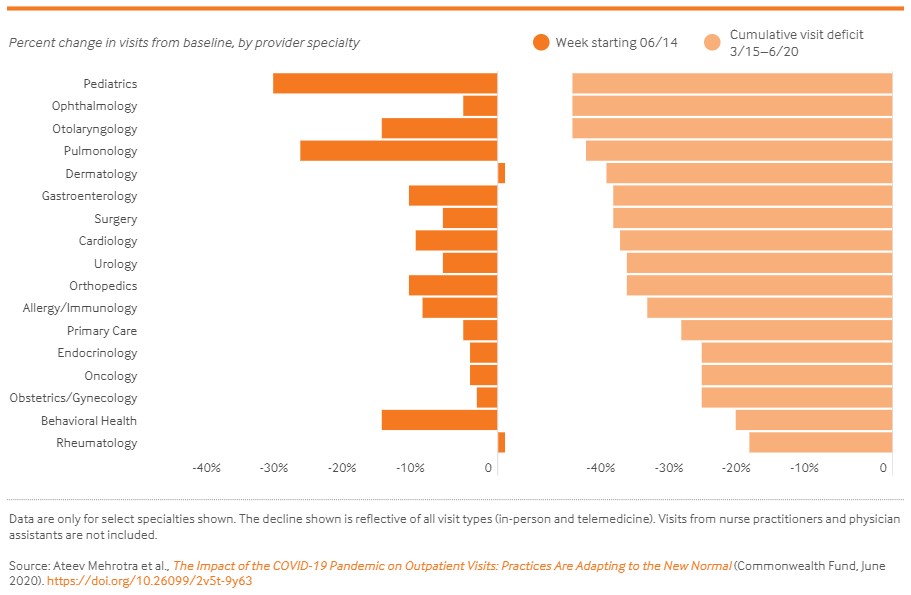
In the latest research update from the Commonwealth Fund, Harvard University, and Phreesia, analysts investigated how office visits have adapted to a “new normal” during the COVID-19 pandemic. Findings revealed a “‘cumulative deficit’ in visits over the last three months (March 15-June 20) is nearly 40 percent,” with the greatest decline being in states that “had an early surge in COVID-19 cases.”

Telemedicine, which was utilized as in-person visits dropped, has begun to decline after peaking in mid-April. The use of telemedicine “remains substanially higher than prior to the pandemic” however.

Furthermore, researchers found that in the week starting June 14th, “visits to some clinical specialties, such as dermatology and rheumatology, have returned to their baseline rates. The cumulative decline in visits from the start of the pandemic is greatest among pediatricians, pulmonologists, and several surgical specialties.”

Data was collected from Phreesia’s clients, which include more than 1,600 provider organizations representing more than 50,000 providers. Visits were captured from February 1 through June 20, 2020.

Click here to read the latest round of findings.

admin


June 25, 2020 0

A federal appeals court struck down the pricing disclosure rule for DTC advertising on June 16th. The US Court of Appeals for the District of Columbia Circuit ruled in favor of Merck & Co, Eli Lilly & Co, and Amgen on the grounds that the US Department of Health and Human Services (HHS) “acted unreasonably in construing its regulatory authority to include the imposition of a sweeping disclosure requirement that is largely untethered to the actual administration of the Medicare or Medicaid programs. Because there is no reasoned statutory basis for its far-flung reach and misaligned obligations, the Disclosure Rule is invalid and is hereby set aside.”
According to the ruling from the Courts, the “Disclosure Rule strays far off the path of administration for four reasons”:

  1. The list price (wholesale acquisition cost, in this situation) differs from what Medicare and Medicaid beneficiaries actually pay. “Beneficiaries typically pay only a fraction … either in the form on a copay or coinsurance.”
  2. The claim that such a pricing disclosure “‘may inform’ consumers” does not clearly indicate if this is directed at Medicare and Medicaid consumers or consumers generally, suggesting an “administrative overreach.” Additionally, with the Secretary’s acknowledgment that a disclosure of such information may backfire by deterring consumers from contacting their healthcare professionals, the federal court ruling stated that “Generating potentially harmful confusion through disclosures to the general public of information that is largely disconnected from Medicare and Medicaid pricing is not a plausible means of administering the programs.”
  3. The Disclosure Rule “regulates advertising directed at the general public and not communications targeted specifically, or even predominantly, to Medicare or Medicaid recipients.”
  4. “The Department’s construction of the statute would seem to give it unbridled power to promulgate any regulation with respect to drug manufacturers that would have the arguable effect of driving down drug prices—or even healthcare costs generally—based on nothing more than their potential salutary financial benefits for the Medicare or Medicaid program. This suggests a staggering delegation of power, far removed from ordinary administration,” noted the federal court’s ruling.

Click here to read the full decision from the US Court of Appeals.

admin


June 18, 2020 0

Rx EDGE® Media Network (part of LeveragePoint Media), a healthcare marketing company that supports pharma marketers in reaching consumers, announces the formation of a new company, InStep Health. InStep Health provides expanded services and product offerings to better support healthcare providers and consumers. With its recent acquisition of Brandperx, InStep Health has added to its portfolio to give product marketers access to 250,000 healthcare providers (HCPs) at the point of care (POC)—the providers’ offices. The increased capabilities will give pharma and OTC partners unprecedented direct-to-patient access that complements the company’s historically strong pharmaceutical marketing reputation in the retail pharmacy.

InStep Health will leverage past successes as it addresses consumerism across the continuum of care. “Now that consumers’ healthcare habits and expectations are changing, reaching patients is more critical than ever. Our intention at InStep Health is to do our part by engaging with them during and in between critical points of care, wherever that may be,” says Nathan Lucht, president and CEO of InStep Health. “No one does exactly what we do in the pharmacy, in the doctor’s office or digitally for patients, consumers and providers. By design, this is more than just point of care marketing.”

The company’s name expresses the distinct and diverse educational scope of the firm’s products and services they provide to consumers as they proceed along their personal healthcare paths. “The name change represents our future-facing, comprehensive platform by which our pharma and OTC clients can deliver education and wellness solutions to consumers when and where they need it most,” adds Lucht.

Heightened accessibility to the 30,000+ retail locations in the company’s network delivers an individual experience “iX” to healthcare consumers seeking solutions across thousands of integrated connection points.

InStep Health combines best-in-class data with the power of relationships to educate consumers at every point of their healthcare game plan, using a strategic blending of tangible and technical approaches. Their metric-driven marketing programs serve the health and wellness community by connecting brands, HCPs, and consumers via today’s ubiquitous digital access points.

About the Company
Since 2001, more than 70 pharmaceutical companies spanning 185 brands have leveraged the power of Rx EDGE® Media Network because they recognize the importance of the pharmacy as an education and communication channel. The acquisition of Brandperx added 80 OTC and CPG brands to their client base. Now as InStep Health, the company connects consumers and patients to brands through unique online and in-aisle resources and at the healthcare providers’ (HCPs) offices. www.instephealthmedia.com.

Contact:
InStep Health
Kathleen Bonetti
EVP Marketing
(847) 879-6036
kathleen.bonetti@instephealthmedia.com
www.instephealthmedia.com

admin


May 27, 2020 0

Mark Zuckerberg said, “Think about what people are doing on Facebook today… they’re building an image and identity for themselves, which in a sense is their brand. They’re connecting with the audience that they want to connect to.” This is the exact strategy that pharma marketers should follow to ensure success with digital and social media. By combining psychology with technology, targeted content can be delivered to patients who are seeking certain health care information in a space where they have a propensity to search at a time when they are trying to make an informed decision. Psychological theories provide a framework for understanding and predicting a myriad of human behaviors and thoughts. Two theories in particular that are most relevant in pharma marketing with digital and social media are the information gap theory and the social proof theory.

The information gap theory of curiosity is relevant in pharma marketing when patients believe that there is empty space between what they know and what they would like to know. Patients crave compelling content. They may be intrigued to know the complete efficacy of a medication prior to introducing a new drug regimen into their personal health care treatment plan. In digital pharma, an effective technique in creating curiosity is developing a headline that captures the attention of readers who will click on it. The 4U formula with headlines that are unique, ultra-specific, useful or relay a sense of urgency drives traffic, shares and search results. “On average, five times as many people read the headline as read the body copy,” according to David Ogilvy whose 1963 book Confession of an Advertising Man is required reading for advertising classes.

Headlines need to be specific enough to attract and persuade readers without being too specific so that readers believe it is unnecessary to click through the data. Information that is forthcoming may be alluded to in a headline, but all of the answers are not provided at the outset. Patients are coaxed into delving deeper. They enthusiastically access the Twitter blog post or Facebook ad by clicking and searching in a definite spot for the information they need.

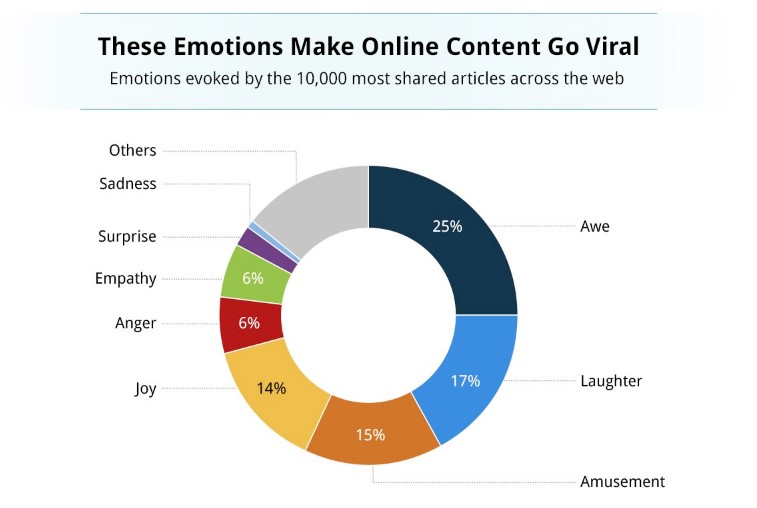
Another effective technique in generating curiosity is leveraging emotional triggers. It is critical to understand the specific words and behaviors that can be used with patients to drive transformation, cause a reaction and create change. Studies report that emotional responses to a basic online ad have over 200% greater influence on buying power than the actual content. Social media messages that extend beyond the features of medicine and connect with personal feelings and experiences is stronger than a message based solely on science, brand characteristics or facts. It persuades patients to take a moment to consider another point of view and engage in a personal way that has meaning to them. It becomes knowledge that is exchanged in both directions and not a sales pitch aimed purely at the patient.

The social proof theory contributes substantially to the success of digital and social media marketing in pharma when patients who sway other patients adopt beliefs or mimic the actions of individuals that they admire or trust, such as celebrities. Patients have an intense desire to gather information from their influencers, including other patients. For example, patient-generated content, such as online testimonials or reviews, are invaluable in showing other patients that a medical device or prescription medication is dependable. Research indicates that more than 80% of patients click on an online ad with content created by other patients with testimonials.

During the coronavirus pandemic, a surge of patients are directing their attention to online influencers for advice and recommendations instead of seeking medical help at a hospital due to their fear of becoming infected by the disease while at a healthcare facility. With celebrity influencers, some communications about medications and medical devices rely on FDA guidance. Recently, Kim Kardashian West overcame slight adversity with a pharma campaign for Diclegis, a pregnancy morning sickness medication, that stirred up an FDA warning two years ago. Complying with regulatory guidelines while maintaining both transparency and authenticity, helps celebrity influencers prevail over possible negative effects of a flawed marketing campaign.

Another technique in social influencing is adding social plug ins and sharing buttons that show the number of shares a particular sliver of content produced indicating positive experiences that other patients will mimic. Patients who are influenced by the actions of other patients are more likely to send along posts that have been shared by other patients. More traffic is directed to the site when content is shared broadly on social or digital media. The interplay is significantly higher which translates into greater sales and higher revenues. In online patient community chat rooms, such as PatientsLikeMe or AskaPatient, connected patients, who are inspired by the opinions and astuteness of others, take the next step and churn out their experiences by further chatting. Half of the patients who use the internet to self-diagnose with online chat features reserve an appointment with a doctor and then ask the doctor for the brands noted in the chat rooms.

In summary, by integrating into technology not only the information gap theory of curiosity, with headlines and emotional triggers, but also the social proof theory, with social influencers, social plug ins, and sharing buttons, pharma companies experience increased search engine traffic, better brand identity and improved leads. The key is for pharma marketers to provide online paths that help patients and influencers exchange data offering different alternatives to inform decision making. Influencers help build brand trust with almost half of the patients depending on their recommendations from social media. Nearly three quarters of patients who have had positive experiences with a brand are likely to suggest the same brand to their friends and family on Facebook, Twitter, and various patient chat rooms. Pharma companies are realizing that there is not one suitable approach with online marketing; rather incorporating the element of psychology into their online marketing platforms adds to their bottom line success.

Resources

Coleman, D. (2013). Rules engagement: 7 tips for successful pharma content marketing. eyeforpharma.

Cornejo, C. (2017). Social media influencers in healthcare and pharma: What’s their role? WEGO health.

Englestrom, C. (2020). Social media marketing for pharma industry. InsightsSuccess.

Jones, S. (2017). 5 Psychological theories to help you understand your prospects. MPH creative.

Mohsin, M. (2020). 10 social media statistics you need to know in 2020. Oberlo. 

Shewan, D. (2017). 6 ways to use the curiosity gap in your marketing campaigns. WordStream.

Williams, B. (2018). The power of emotion in pharma advertising – stronger than ever in 2018. Bastion brands.

admin


May 27, 2020 0

In mid-May, the Commonweath Fund, Harvard University, and Phreesia collaborated to publish findings of COVID-19 impacts on outpatient visits and telehealth; this provides an update to an earlier April publication. From mid-February to mid-May, data from more than 50,000 providers from Phreesia’s client base and more than 12 million visits was analyzed.

According to the latest findings, “As in-person visits dropped, telehealth visits increased rapidly before plateauing. The rebound in visits is due to more in-person visits rather than more telemedicine visits.” The research found the rebound in visits to be true across all specialties studied (see chart below). Providers reported consistent data “in the initial decline and resulting rebound in visits” regardless of organization’s size.

Age, however, does appear to factor in to the rebound levels. Older adults are showing higher levels for rebounding in doctor visits versus school-age children when comparing April to May data. For example, those aged 65-74 showed a 61% decline in visits for the week starting April 5th but only a 30% decline in visits for the week starting May 10th. Children aged 6-17 recorded a 71% drop in visits the week starting April 5th and a 53% decrease in visits the week starting May 10th.

The Commonwealth Fund “promote[s] a high-performing health care system that achieves better access, improved quality, and greater efficiency, particularly for society’s most vulnerable, including low-income people, the uninsured, and people of color. The Fund carries out this mandate by supporting independent research on health care issues and making grants to improve health care practice and policy. An international program in health policy is designed to stimulate innovative policies and practices in the United States and other industrialized countries,” states their website.

One of the group’s researchers, David Linetsky, Phreesia’s SVP Life Sciences, also joined DTC Perspectives for our virtual DTC National: May event discussing the Point of Care space. Click here to hear more insights: https://www.dtcperspectives.com/virtual-dtcn/view-past-webinars/

admin


April 29, 2020 0

UPS and CVS Health Corporation announced this week that they will deploy the use of drones to deliver prescription medicines to The Villages in Florida, the largest retirement community in the US. In the news release, Scott Price, UPS chief strategy and transformation officer stated: “Our new drone delivery service will help CVS provide safe and efficient deliveries of medicines to this large retirement community, enabling residents to receive medications without leaving their homes. UPS is committed to playing its part in fighting the spread of Coronavirus, and this is another way we can support our healthcare customers and individuals with innovative solutions.”

This service will begin in early May, abiding by Federal Aviation Administration’s Part 107 rules. This has the potential for expansion “to include deliveries from two additional CVS pharmacies in the area,” noted Monday’s announcement. “The first flights will be less than one half mile and be delivered to a location near the retirement community. Initially, a ground vehicle will complete the delivery to the resident’s door.”

UPS’ subsidiary, UPS Flight Forward (UPSFF) will use Matternet’s M2 drone system. UPS and CVS first announced such a partnership last year, completing their first successful prescription delivery in November 2019 in Cary, NC. Previously, UPS teamed up with Matternet to launch a revenue-generating drone delivery service at WakeMed’s flagship hospital and campus in Raleigh, NC; it was later followed by service at University of California San Diego Health system.

admin


April 29, 2020 0

PatientPoint and the Everyday Health Group have created an exclusive partnership to provide consumer and professional content in POC spaces across the country. The partnership “aims to create a more interactive, engaging and immersive point-of-care content experience – replacing fear and anxiety with community, curiosity and confidence,” stated the news announcement.

The release continued, explaining that “EverydayHealth.com consumer health and wellness content to be featured on PatientPoint digital waiting room screens and interactive exam room screens will include engaging, fun and ‘snackable’ healthcare news, interactive quizzes/polls/assessments, infographics and tips. Breaking medical news from MedPage Today will be featured on digital PatientPoint screens in the physician back office.”

Mike Collette, Founder and CEO of PatientPoint, along with Dan Stone, President of the Everyday Health Group, proudly expressed their commitment to serve patient populations and healthcare professionals by leveraging technology and engaging, informative content. Both companies continue being among those leading our industry, as providers of health information and news, including during the COVID-19 pandemic.

admin


April 29, 2020 0

CheckedUp announced yesterday the launch of their new advanced telemedicine platform for specialty care. CheckedUp Virtual Visits was created by physicians to ensure that its development meets the needs and engages patients and physicians at the point of care, especially as this space and our world become increasingly digital-centric.

“From early on, our leadership team viewed the COVID-19 crisis as an unprecedented challenge requiring an innovative response,” said Mark Goethals, Vice President of Marketing, CheckedUp [via the news release]. “Our efforts are focused on a new, post-COVID healthcare delivery landscape, delivering the service and functionality of a virtual examination room to patients and enabling providers to deliver superior virtual patient care. CheckedUp Virtual Visits allows physicians to meet their patients when and where they are, while providing innovative tools for providers and patients during their digital consultation. We are also happy to extend that accessibility to our partners in the life sciences, so that they can be a part of tomorrow’s healthcare conversations.”

Dan Schwartz, the company’s Senior Vice President, Sponsorship Sales added, “Current telemedicine systems, while serving an important role today, offer very little by way of additional in-office technologies, making exceptional care possible. We expect to change that.” Evolving beyond the traditional telehealth system, the new released noted that their HIPAA-compliant innovation “simplifies scheduling and operations, allows patients to see the dedicated specialist they know and trust, and brings the same easy to use technologies physicians use in the physical exam room, into the virtual realm.” Notes and information from each consult made by the physicians will be tracked to help further streamline the administrative side of such virtual treatment.

admin


April 29, 2020 0

It was announced yesterday that Matt McNally, CEO of Outcome Health, has been named to the Board of Directors of the Ad Council. McNally joins “a prestigious group of senior marketing and media executives who provide expertise, insights and financial support to ensure the Ad Council’s social good communication campaigns are effective and impactful,” stated the non-profit organization’s news release.

“For Outcome Health this relationship with the Ad Council as an opportunity for new partnerships in areas like content creation, access to new expert content and distribution through our Point of Care network and other new channels,” explains Matt McNally, CEO, Outcome Health. “I have always admired what the Ad Council has done during times of health crisis, from Polio to HIV/AIDS and most recently COVID-19. Our company is looking forward to collaborating with the Ad Council board and its members to advance social change, particularly during this time of unprecedented public health crisis and economic uncertainty.”

According to an industry press announcement, “Outcome Health is the only healthcare platform working with the Ad Council to launch and distribute ‘Out There for Us,’ a campaign that thanks all essential workers for their dedication, resilience and courage amidst the COVID-19 pandemic. By distributing the campaign at Point of Care, Outcome Health is giving doctors, nurses, healthcare professionals, allied healthcare workers, pharmacy and support staff on the frontlines a better chance to see these special acknowledgements.” The Ad Council announced the “Out There for Us” campaign this past Monday (April 27th). As an extension of their current and on-going COVID-19 efforts, this campaign will feature “Good Job”, a new song from fifteen-time Grammy winner and musician Alicia Keys. In addition to the POC distribution via Outcome Health, the campaign will also utilize social media, video assets, and digital OOH ads. These will be “strategically placed on route to hospitals, highway road signs and outside grocery stores in cities facing heavy surges of the virus. … a take over within New York City’s Times Square and one of the largest OOH billboards in America, located at the junction of I-10 and 100 in Los Angeles.” The media has been donated from the Ad Council’s partners and the creative agency, R/GA developed the work pro bono.

This is the latest work from Outcome Health. The point of care company has been partnering with “nonprofit organizations, health advocacy groups, industry content creators, and its own original content created with information from the CDC and federal and state Departments of Health” to provide accurate and timely information to patients and healthcare professionals. Some of their work has also focused on vulnerable or at-risk populations, including children or domestic abuse sufferers.

admin