 I sat down with Charlie Greenberg, a respected healthcare industry veteran and an expert in point-of-care (POC) marketing, to discuss current trends in healthcare marketing. It’s a topic Charlie knows well, having worked for more than 30 years in the industry with giants like Saatchi & Saatchi, Wyeth, and Merck. Charlie currently serves as a media and marketing consultant, so he spends a great deal of time thinking about the ways brands can improve their reach and maximize their return on investment.
Q: How has healthcare marketing changed during your time in the industry?
A: Market research on patient population profiles and their attitudes toward treatment options has become increasingly more sophisticated. We no longer focus only on demographics and affinity interests, but now incorporate attitudes toward treatment options, healthcare status, and relevant multicultural distinctions within an overall target universe.
Paid media in the marketing mix has embraced this more sophisticated market research by employing greater targeted media tactics. This is not only a function of the evolution of digital media but greater opportunities within the point-of-care arena and the availability to refine how mass media can reach a target audience.
Q: What’s the biggest thing healthcare marketers aren’t doing that they should, or that they should be doing more of?
A: Good marketers set themselves apart from the pack when they are willing to make bold decisions and address the marketplace by shaping customer thinking. Adopting a mindset of “test and learn” around how marketing dollars are spent needs to be better embraced. Short-term thinking often leads to stagnation and missed opportunities.
Secondly, marketers should also be investing more in communication which has the goal of building health literacy. This will not only support the ability to shape consumer thinking, but health literacy campaigns have been shown to lift the efforts of branded commercial campaigns when the two messages are running together.
Q: What effect can point of care (POC) have on the overall media plan? What benefits can brand managers and media planners realize from adding this channel to their mix?
A: Adding POC to a plan will increase the ability to laser target reaching prospects and patients. This complements the efforts of other tactics within the plan. Secondly, POC offers a guaranteed ROI, which also enriches the promotional effectiveness of the overall marketing plan.
Q: Why is healthcare personal to you?
A: It is rewarding to be able to feel a sense of achievement from launching that new snack food item on shelf, introducing a new car model or driving purchases of yet another shade of red lipstick. However, healthcare marketing offers a benefit of knowing that you are helping people understand health conditions and offering treatment to increase their quality of life.
Q: What’s your favorite thing about being a New Yorker?
A: New York City offers real mobility since it is one of few places in America where you have the option to walk to get to your destination rather than being tied to your car.
 The pharmaceutical industry is one of the most powerful sectors in the United States. The United States government has long realized how much of an influence the industry has had since its origin over a century ago and has regulated the industry as such.
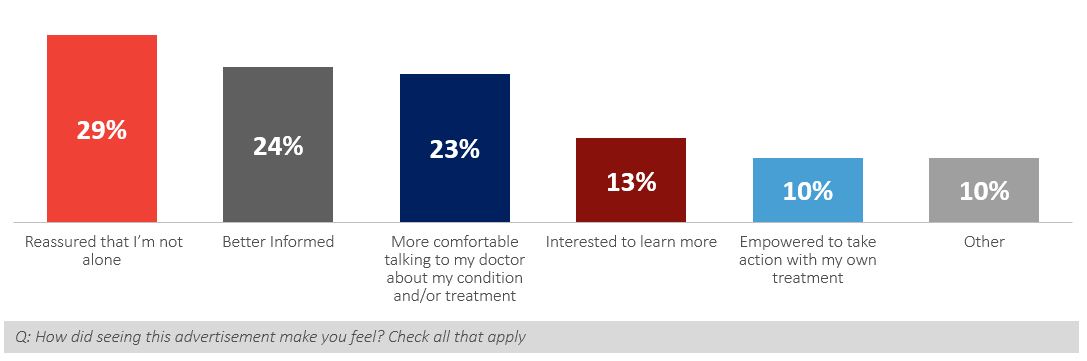
 The results demonstrate that patient engagement solutions at the point-of-care can provide pharma with an opportunity to drive better physician-patient discussions, insert their brand into those discussions and ultimately help educate on better treatment decisions. This is an unprecedented and unique ability to impact both audiences at that magic moment when treatment decisions are being made.
 The promotion of products with branding, growth of empathy awareness through an imaginative experience, education, and training are all marketing opportunities that engage patients and doctors while increasing sales, drug compliance, and the number of new drug users. VR produces branding by supporting products that stimulate creativity and evoke senses which results in a unique, complete experience rather than merely a visual presentation. Empathy is built when doctors reaffirm to themselves that they chose their medical careers so they could positively influence humanity. VR serves as training and education for doctors with the optimistic outlook that any mistakes would occur during these simulated patient encounters and not in the real world. By presenting in videos the negative impacts on the quality of life with drug non-compliance, doctors are encouraged to prescribe certain therapeutic medications to keep patients on drug therapy for a longer period of time. This not only equates to improved health, but also an increase in sales and market penetration during growth and maturity drug cycles.
 Technology Media vs. Traditional Media
 While there is no one right approach to POC validation, the bottom line is clear: It all comes down to trust and delivery. When choosing a POC provider to partner with, you not only have to ask whether you can trust the experience of this provider, but also whether they can substantiate with facts that you are indeed getting what you pay for.
 The theme of this month’s newsletter is consumer trends. Here’s a recent one worth talking about: According to