

You would be hard-pressed to find a person who hasn’t been affected in some way by the national epidemic of opioid addiction. Whether as an individual, or through family, friends, colleagues, neighbors—we all know, or at least know of, someone who has struggled with this growing issue.
It’s no wonder, then, during the past year many beautiful and incredibly influential disease awareness and DTC campaigns have been created to destigmatize and humanize this heartbreaking issue. These campaigns drive home the truth that people with addiction issues are not just the individuals who live questionable lifestyles, have separated from society, and are living on the streets. They are the people you see every day, the individuals who have full, successful lives—the high-powered executive, the college athlete, the church-going grandmother who is recovering from surgery. A few current ads speak to this issue; all of which are doing the important job of bringing the conversation forward and shedding light on the issue, as well as challenging the misconceptions around opioid addiction. Here are some of the best:
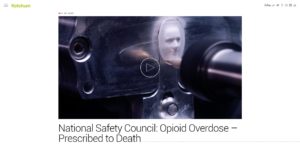 Prescribed to Death, National Safety Council
This robust, award-winning campaign by the National Safety Council was originally launched in 2018, and it has been evolving and growing ever since. It hits all touchpoints—from the traveling monument that personalizes the effect of loss through a display of pills carved with the faces of 20,000 real people lost to opioid addiction in just one year, to the newly implemented “Opioids: Warn Me” stickers designed for people to apply to their insurance cards to ensure doctors and pharmacists have a conversation about the benefits of, and concerns around, the drugs being prescribed to them.
- https://www.ketchum.com/work/opioid-overdose-case-study-prescribed-to-death-ketchum-3/
- https://www.youtube.com/watch?v=0jmDHoPUGKI
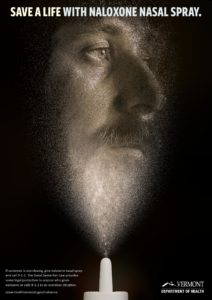 Mist, Vermont Department of Health
It’s not every day that you come across great creative coming out of a state health department, but this is certainly a wonderful exception. The series, each page of which beautifully illustrates how naloxone truly does help breathe life back into people on the cusp of death from opioid overdose, captures the powerful impact of the drug and the importance of being able to save a life—all in one striking image.
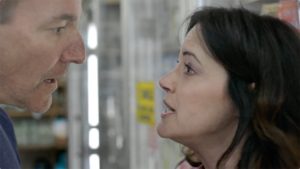 Impossible Questions, Partnership for Drug Free Kids
Most public service announcements (PSAs) tend to be directed toward individuals who are immediately at risk, with the objective of raising awareness and/or changing individuals’ attitudes or actions. This one views opioid addiction with a different lens by speaking to the effect it has on the parents of an addicted child. Through the simple art of storytelling, this PSA highlights the impact of addiction on an intensely personal, relatable level, and shows how, even within the bonds of a marriage, the fight to help someone in the throes of addiction can leave people feeling isolated, afraid, and alone.
- https://www.adweek.com/agencies/these-psas-about-opioid-addiction-focus-on-the-parents-of-sufferers/
- https://www.youtube.com/watch?time_continue=9&v=R0Xo6gXto64
 Pill Case, First Call
The stopping power of this particular campaign is significant, in part because the ads leave no room for interpretation. By transforming a familiar, everyday object into a depiction of small, powerful vignettes, First Call and VML do a masterful job of illustrating what the future likely looks like if you’re an opioid addict. The individuals shown are literally trapped in the day-to-day reality of addiction—a future that is ominous, dark, and alarming. The powerful imagery captures the incalculable human cost of this rampant epidemic.
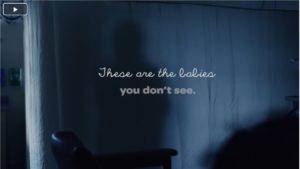 Behind the Door, Huggies
This awareness ad comes from Huggies, an unlikely source considering the brand is universally recognized as being associated with the warm, happy feelings that babies tend to evoke. The video itself addresses the littlest and most innocent casualties of opioid addiction and shares the powerful way Huggies is looking to help effect change in the lives of newborns who are born to addicted mothers. Huggies really shows its values and commitment to its customer base in both this ad and the program the company funds.
 The official
  More than 200 influencers attended
  Ethan Lindenberger made headlines this past year when, at the age of 18, he went against his parents’ wishes and chose to get vaccinations. According to the news release, “Ethan grew up being told that vaccines cause autism, brain damage, and do not benefit the health and safety of society despite the fact such opinions have been debunked numerous times by the scientific community.” Through his own research, he learned about the benefits of vaccines and was able to debunk myths and misinformation. The now 19-year old has become an activist know for his “opposition to vaccine misinformation efforts” and has thus joined
  Unity’s Voices of AYA encourages young adults and teens to get and stay up-to-date with recommended vaccinations and helps them identify misinformation online.
 To help combat opioid addiction, PatientPoint® collaborated with Shatterproof – a nonprofit organization focused on ending the stigma of addiction and improving addiction treatment – to create a powerful opioid education program at the point of care. It launched nationwide in October 2017 across the digital PatientPoint engagement platform, reaching an estimated 15 million patients and caregivers each month in waiting rooms, exam rooms, and in the physician back office. The content is designed to increase the awareness of opioid addiction and encourage doctor-patient discussions about other treatment options.
 The Tylt is the fastest growing social polling and opinion
  For healthcare campaigns, the process begins with locating the right patient and encouraging them to share their opinion on a personally meaningful health topic. Patient advocacy becomes democratized when declared sentiments, informed by supporting evidence, are shared socially. By bringing structure to health conversations as they trend across social, patient insights can be identified and addressed in the next wave of interactive content, positioning the brand as a partner in the journey to better health.
 In “The Ups and Downs Campaign,” upon entering the elevator and pressing the button to her floor, all of the button lights begin to flicker rapidly. The elevator plummets down, with the doors then opening to show her crying on the edge of her bed, before surging back up high, where the doors open on a scene of her arguing with a man. The elevator screen then shows the arrows pointing in both directions, as the doors open to reveal her clothes shopping in a panicked state. After taking VRAYLAR, the elevator ride steadies before stopping in her current life moment where she cleans up the mess in her bedroom, and then takes a smooth elevator ride to meet her date in the lobby.
 The custom campaign, In These Rooms, launched this month to help transform the point of care space to a more empathetic “moments of care” image. Created by Outcome Health, a
  To provide a well-rounded representation of potential patient and caregiver experiences with their healthcare professionals, the creative includes: “a waiting room, a pediatrician visit for an asthma check-up, an OB-GYN ultrasound room to hear a baby’s first heartbeat, a standard exam room for a long-overdue physical, and a doctor’s office to learn about treatment results.”